Designing the Infrastructure: Cadence, Ratings, and the Systems That Support Performance (Performance Mgmt. Series 3/7)

Every executive team says the right things about performance. Fewer build the systems that make those things true.

Strong performance cultures are not powered by good intentions. They are powered by infrastructure. Clarity and incentives matter, and so does collaboration design. But without operational discipline — cadence, structure, tools, and calibration — performance management becomes inconsistent and personality-driven. That's when employees start "managing their manager" instead of managing their performance.

This is where many executive teams stall. They agree on the philosophy. They struggle with the architecture.

A performance system requires three infrastructure layers: rhythm, rigor, and reinforcement.

1. Rhythm is the cadence that prevents drift. Performance management fails when it is episodic. A once-a-year review does not create accountability; it creates memory. High-functioning organizations establish a predictable rhythm: recurring 1:1s, quarterly goal alignment, periodic formal reviews, and calibration moments. The purpose of cadence is not bureaucracy. It is prevention.

2. Rigor is the criterion that makes performance fair. Infrastructure without rigor becomes performative. If ratings exist, they must mean something. “Meets” and “Exceeds” are not useful without shared definitions. Two managers should not be operating with two different standards of excellence. Clear rubrics and capability matrices reduce bias and create consistency. Calibration conversations matter because they force leaders to pressure-test their assessments, not just defend them.

3. Reinforcement is what turns evaluation into development. Performance management is not only about reviewing the past. It is about preparing for the future. Strong systems incorporate talent reviews focused on readiness, potential, succession, and development investments. Without talent reviews, succession becomes reactive. When they are present, leadership development becomes strategic.

This is also where separating growth and compensation becomes operationally important. Development conversations should explore aspirations, stretch opportunities, exposure, and long-term trajectory. Compensation conversations should focus on performance against defined metrics. Blending the two muddies both — and almost always makes the development conversation less honest.

Technology can help, but it cannot lead. Many organizations use platforms like Workday, Lattice, 15Five, Culture Amp — or even structured workflows in Monday.com — to support 1:1s, feedback, goal tracking, recognition, and talent reviews. Used well, tools create transparency and institutional memory. Used poorly, they digitize ambiguity.

Executives sometimes over-index on selecting software when the real work is aligning on standards, cadence, and consequences. Tools should make performance conversations easier to have — not replace the courage required to have them.

At its core, infrastructure is about consistency. When performance management depends entirely on individual manager discretion, the system is fragile. When you institutionalize rhythm, rigor, and reinforcement, performance becomes scalable.

Reflection Question: Where is your performance management system currently dependent on individual manager discretion rather than shared infrastructure?  Comment and share below; we’d love to hear from you!

Quote of the Day: “Without data, you’re just another person with an opinion.” — W. Edwards Deming

As an Executive Coach, I partner with leadership teams to help them performance manage with both excellence and compassion. If you’d like to strengthen how your leaders hold standards and develop people, let’s connect.

The next article in this series 4/7 will focus on upward accountability.
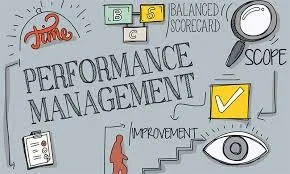
Which system supports your goals?
When Incentives Kill Collaboration: The Hidden Design Flaw in Performance Mgmt. (Performance Management Series 2/7)

Most organizations say they value collaboration. Many include it in leadership principles and town halls. And then they design performance systems that reward individual heroics and short-term output.

The result is predictable. People do not become poor collaborators because they lack character. They become rational actors inside a misaligned system.

Heidi Gardner has written extensively about this tension in professional services firms. Her core message is simple: if collaboration is treated as a soft value but performance is measured as hard individual metrics, people will prioritize what is most rewarded and least ambiguous. Over time, collaboration turns into theater.

I’ve seen this play out with my clients in consulting environments structured around siloed metrics. Each practice group owned its number. Bonuses were tied to that number. Publicly, the firm celebrated “full-service collaboration.” Practically, people filled their own bucket first. Only after hitting the target did they consider how other capabilities might serve the client. Collaboration became an afterthought rather than a design principle.

The shift came when performance metrics were redesigned around key client teams. Revenue volume was no longer sufficient. Leaders began measuring revenue quality, the sustainability of client relationships, and the account’s overall health. Cross-functional coordination mattered. Long-term value mattered. The question changed from “How much did you sell?” to “What value did we create — and is it durable?”

Engagement improved almost immediately. When people are rewarded for enterprise contribution rather than internal competition, energy shifts. Patty McCord has made a related point in her work on talent density: high performance isn’t just about keeping strong people — it’s about removing structural conditions that make strong people want to leave. Misaligned incentives are one of those conditions.

This is why multi-level scorecards matter. A single metric is easy to manage but rarely strategically correct. If you want an enterprise to behave like an enterprise, performance must be evaluated at three levels: the broader organizational outcome, the team’s contribution to that outcome, and the individual’s results and capabilities. The weighting matters. If individual output dominates, self-optimization wins. If enterprise goals dominate without line of sight, people feel powerless. The executive task is to balance influence with impact.

Sales environments often illustrate this tension clearly. Incentivize pure revenue growth, and you may get deals that operations cannot fulfill, promises customer success cannot sustain, and documentation that is thin because the next deal is already in motion. Revenue rises. Customer satisfaction declines. Leaders call it an execution issue. In reality, the system paid for speed and volume — and got exactly that.

True collaboration is not cross-selling disguised as partnership. Sophisticated clients can often detect compensation shifts simply by observing behavior. When introductions and referrals increase suddenly in January, clients notice. Collaboration should begin with a different question: is this in the client’s long-term interest? If you cannot articulate the value created, it is likely not collaboration.

A more strategic tension also plays out: short-term versus long-term value. Organizations often speak aspirationally about sustainability, innovation, and multi-year initiatives while over-weighting short-term, easily measurable metrics. People are not ignoring long-term priorities because they are shortsighted. They are responding to what the system reinforces. Incentives guide decision-making and resource allocation. If long-term thinking matters, it must be visible and rewarded.

Tony Hsieh famously offered employees money to quit as a way to protect culture. While extreme, the principle is instructive: incentives shape behavior. When incentives and stated values conflict, incentives win.

The strongest performance systems align what leaders say they value with what they actually reward. They measure collaboration in meaningful ways, protect against the distortions of narrow metrics, and make enterprise contribution visible. When alignment is present, people stop gaming the system and start building the business.

Reflection Question: Where are your incentives quietly encouraging siloed behavior, even while you publicly advocate collaboration?  Comment and share below; we’d love to hear from you.

Quote of the Day: “Show me the incentives, and I’ll show you the outcome.” — Charlie Munger

As an Executive Coach, I partner with leadership teams to help them performance manage with both excellence and compassion. If you’d like to strengthen how your leaders hold standards and develop people, let’s connect.

The next blog in this series 3/7 will focus on designing the infrastructure.

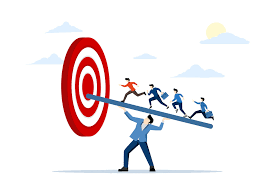
How do you align incentives?

Performance Management as a Strategic System - Not an HR Event (Performance Mgmt. Series 1/7)

Most leaders say they want a high-performance culture. Far fewer build the system that makes high performance repeatable.  At its best, performance management is not a compliance ritual or an annual form. It is the executive operating system that turns strategy into standards, standards into behavior, and behavior into results. When the system is clear and consistent, performance becomes less political, development becomes more honest, and leadership becomes more scalable.

The confusion is understandable. Many systems have earned their bad reputation. If you’ve worked in an environment where people were “racked and stacked,” reduced to a number, or forced into artificial competition, you’ve seen the downstream effects. Morale erodes, collaboration becomes performative, and managers avoid hard conversations until they’re unavoidable.

What’s often missed is this: performance management does not just measure culture - it creates it. If the system is vague, inconsistent, or avoidant, it trains people to be vague, inconsistent, and avoidant.

In Scaling People, Claire Hughes Johnson describes performance management as a structured, scalable way to help employees understand expectations, track progress, receive feedback, and grow – while aligning individual contribution with company goals. That framing matters. It shifts performance management from “review season” to “how we run the business.”

High-functioning systems get a few things consistently right.

1. They prioritize clarity. Performance problems often begin with ambiguity, not incompetence. People cannot reliably hit a target they cannot see. Strong organizations define responsibilities, competencies, and success measures clearly enough that two managers evaluating the same work would reach similar conclusions. Role expectation documents and capability matrices are not bureaucratic tools — they are fairness tools. They define what growth looks like.

2. They build frequency into the system. Feedback that arrives once a year is not feedback; it’s a historical record. Effective systems create cadence — regular check-ins, course corrections, and recalibration moments that prevent small misalignments from becoming expensive ones. When teams discover performance gaps at year-end, the system has already failed.

3. They anchor evaluation in observable evidence. Not “data” for the sake of reporting, but shared criteria that reduce bias and inconsistency. When evaluations are based primarily on vibe, similarity, or confidence cues, trust erodes. Clear criteria and calibration across leaders protect both employees and managers. The goal is not to eliminate judgment — it is to make it consistent.

4. They hold accountability and growth simultaneously. Weak cultures swing between extremes: relentless pressure with little development support, or development conversations that never translate into consequences. Strong leaders do both. They name the gap. They reinforce the standard. And they invest in growth where it is warranted. Kim Scott’s reminder from Radical Candor fits here: challenge directly while caring personally. Candor without care is harshness. Care without candor is avoidance dressed up as empathy.

5. Separate growth conversations from compensation conversations. This is an often-overlooked design choice. When development and bonus discussions are commingled, growth becomes negotiation. Compensation triggers defensiveness or relief; development requires openness. When you separate the conversations, feedback becomes more candid and future-focused.

At the executive level, the question is straightforward: does your performance system create more clarity, capability, and trust over time — or more fear, politics, and short-term optimization? Culture is not shaped by what leaders say they value. It is shaped by what they measure, reward, and tolerate.

Reflection Question: Where is your performance management system currently creating clarity - and where is it creating confusion?  Comment and share below; we’d love to hear from you!

Quote of the Day: “A bad system will beat a good person every time.” — W. Edwards Deming

As an Executive Coach, I partner with leadership teams to help them performance manage with both excellence and compassion. If you’d like to strengthen how your leaders hold standards and develop people, let’s connect.

The next article in this series 2/7 will focus on misaligned incentives.

How do you manage performance?

For Quality Sleep, Make Better Daytime Decisions (sleep series 3/4)

Getting good quality sleep does not just happen when your head hits the pillow, but from the moment you wake up.  Our behavior throughout the day and the choices we make, especially in the last few hours of our day can significantly impact our ability to get great rest.

Here are some practical things to do during the day to improve your sleep:

1. Control Stimulants.  As a general rule, it is best to cut off caffeine by 2 pm. Try to give yourself at least eight caffeine-free hours before bedtime. Nightly alcohol also disrupts your sleep quality.  Some people may believe a couple of glasses of wine can help them fall asleep quickly, which may be true, but the problem is that sleep hinders the REM stage, which is the most restorative.  That’s why even when getting many hours of sleep after a night of drinking, we wake up exhausted because alcohol has gotten in the way. The rule is if we are going to have a drink, make it at least three hours before bed; for two drinks, at least four hours before sleep.

2. Get Sunlight Exposure. The more daylight you soak up, the happier and the more alert you will be, which will allow you to sleep better at night since some of that energy has been expended earlier.  Even if you may not be able to get outside, sitting near a window can also help.  Studies show that on average, employees whose offices have windows get 46 min more sleep every night.

3. Exercise. Even as little as 10 minutes of exercise per day can dramatically improve the quality and consistency of your sleep. For one thing, it is because movement tires the body, which increases the chances that you’ll be sleepy when it is time for rest. Sleep specialist Matthew Walker recommends visiting the gym after work rather than before because it is a great way to reduce stress after a day at the office.  The movement helps burn off any tension, which enables you to wind down more easily and relax when you get to bed. Taking more walks can help boost your energy so the next time you need to make a phone call or have a meeting, why not combine it with walking?

4. Eat Well. The food we consume throughout the day has a surprisingly strong impact on our sleep. In particular, eating saturated fats and sugar is associated with a harder time falling asleep. Fat requires the body to work overtime, which makes it more difficult for us to feel comfortable. Regularly eating a cheeseburger and french fries – especially for dinner – causes your sleep quality to suffer, and frequent sugar intake raises energy arousal. Accordingly to an Australian study, spicy food may also disrupt your sleep.  In addition to the higher fat levels, it can increase your internal body temperature, which needs to lower for you to have restful sleep. If you eat these foods too close to bedtime, your body expends energy in digestion rather than helping your brain fall asleep. Many studies would advise not eating at least 3 hours before bed.

The choices you make during the day can have a major impact on the quality of sleep you have. When you are eating healthy, exercising, getting appropriate sunlight, and avoiding stimulates like caffeine or alcohol late in the day, you are creating the conditions for the best sleep of your life.

Quote of the day: “Dreaming permits each and every one of us to be quietly and safely insane every night.” ― Charles Fisher

Q: What are some productive daytime activities that help you sleep better at night?  Comment and share with us, we would love to hear!

The next blog in this sleep series 4/4 will focus on optimizing your nighttime routine.

Are you inspired by the way you lead yourself? As a Leadership Coach, I partner with people to grow their leadership ability so they can live their best life and develop others more effectively. Contact me to learn more.

Make healthy eating choices for better sleep

Make healthy eating choices for better sleep

Tips for Being a Super Sleeper (Sleep Series 2/4)

When was the last time you thought about the quality of your sleep? Given that it is one of the most important factors that can greatly impact our health, happiness, productivity, and relationships, it seems like it would be pivotal to invest our time to be super sleepers.

The National Sleep Foundation and the Center for Disease Control recommend 7-9 hours. Because every person is different, how much sleep you need depends on your genetics and how you are spending your waking hours. Some people may believe they fall into the category of needing only a few hours of sleep, but their underslept brain may be tricking them.  Arianna Huffington, Author of the Sleep Revolution notes, “Unless you have a genetic mutation and can function on three to four hours of sleep which is 1.5% of the population, the rest of us need 8-9 hours to have fully restorative sleep.”

If you are not sure how many hours you need to feel refreshed, you can run an experiment over a holiday or long weekend to find out.  Allow yourself to wake up whenever you want without setting an alarm. Needless to say, if you are backed up on sleep, the first night of doing this will not tell you much because you will be making up for lost sleep. But after one to two nights, you will start noticing how many hours you are getting when you wake up naturally. 

Why Are We Sleep Deprived?  Here Are Some Common Culprits:

1. Incompatible work schedules. Your work schedule may not be conducive to your natural tendencies. You may be a night owl who can do your best work in the evenings but those creative insights sparked at midnight will take a toll on your job when you have to report to the office at 9:00 am or even earlier.

2. Technology disruptions. Researchers have known for years that the blue-ish light that smartphone screens emit can make it harder to fall asleep.  A new study from Deloitte found that one-third of adults check their phones if they wake up in the middle of the night, as do nearly half of those under the age of 35. This smartphone addiction is impacting our ability to fall asleep and to remain so.

3. Coffee consumption. Caffeine is a stimulant that raises alertness and blocks our bodies from getting tired. What most people may not realize is that coffee has a half-life of 5-6 hours, meaning that if you drink a cup of coffee at 6 pm, 50% of that caffeine will still be in your system at 11 pm. So while your body may be tired later in the day, your mind is still racing, preventing you from winding down.

Now that we laid out key sleep disruptors, let’s turn our attention to tips for getting the best sleep of your life:

1. Minimize technology. Curtail technology use about an hour before bed; if you must consume, read a book.  To avoid distractions, use the iPhone bedtime app or an equivalent.   By setting an alarm for when you want to fall asleep, the “do not disturb” function switches on, and your phone will not continuously lure you with dings and vibrations.

2. Set the right temperature.  Being a little chilly will help you fall asleep more easily.  The ideal temperature is around 68 degrees but adjust according to personal preference. 

3. Control the light.  Light tells our brain it is time to wake up so keeping them dimmed leading up to bedtime can help. When you are ready to sleep, make your room as dark as possible.  You can even cover up any blinking lights from your laptop, cable box, or tv with stickers called lightdims.

4. Be Consistent with your sleep routine. A mistake that a lot of us make is that we stay up late on Friday and Saturday, and sleep later the following mornings. That leads to a phenomenon that psychologists call “social jet lag” because it’s what happens when our social life throws off our bodily rhythms. Sleeping in on the weekends after a late night with friends or binge-watching Netflix is what causes Sunday night insomnia. Going to bed and waking up roughly the same time will prime your body for nighty rest.

5. Create a sleep runway. If you are aiming to sleep at 10:00 pm, you should create a sleep runway of at least 10-20 minutes, depending on how long it takes you to fall asleep after you close your eyes.  Most people falsely assume that if they are in bed at 10 and up at 6, they have met their quota, but being in bed is not the same as being asleep.

Sleep deprivation is a pervasive problem and if left unaddressed, it can have devastating consequences. Creating the ideal conditions can help you get the best sleep of your life and have you perform at your best in all your important arenas.

Quote of the day: “Tired minds don’t plan well.  Sleep first, plan later.”  -Walter Reisch

Q: When you are having trouble sleeping, what is usually the main reason?  What trick do you use to help you fall asleep? Comment and share below; we would love to hear from you!

The next blog in this sleep series 3/4 will focus on making better daytime decisions for sounder sleep.

Are you inspired by the way you lead yourself? As a Leadership Coach, I partner with people to grow their leadership ability so they can live their best life and develop others more effectively. Contact me to learn more.

How do your habits contribute to your lack of sleep?

How do your habits contribute to your lack of sleep?

It’s All About A Team-First Mentality (Team Series 3/10)

In today’s driven society, it is not uncommon for companies to have teams filled with talented, ambitious, opinionated people with large egos who want to advance in their careers.

The temptation for people to stand out from the crowd for recognition, promotion, bonuses, and office size looms ever large.  Internal competition creeps in and those company perks become ways to keep score.  The word team, unfortunately, exists in name, but not in practice because it becomes a collection of rivals who want to pursue individual achievement over group success.  If unchecked, these intergroup conflicts can have adverse rippling effects. 

So, how do you encourage your members to act as a team?  In short, form a community.  Phil Jackson said, “Good teams become great ones when the members trust each other enough to surrender the Me for the We.”  Do not just think about your team as a compilation of members who are working towards completing a job.  Instead, see them as much more -  a community that supports each other to be better than they think they can be as they march towards a common goal that they also personally care about.  Teams that act as communities do not have to be best friends and spend all their time together, but they have to know how to integrate their interests and put aside differences. 

The benefits of a community cannot be ignored.  Those who feel like they are part of a supportive network at work are more engaged, more productive, and are less likely to experience burnout.  The simple fact is that teams of people who subordinate individual agendas will always outperform teams that do not. 

Here are some ways you can build community:

1. Understand your role as contributing to the greater good.  Numerous examples can be found in sports.  Shane Battier is known as a no-stats All-Star in basketball, he never scored a lot of points or got a lot of rebounds, but he made his teammates more effective and the opposing team less so.  His team was more likely to win with him in the game and was part of two NBA championships. He knew exactly what his role was, which was not to be the best small forward in the league by merely chasing stats but to do whatever he had to do to be the best for his team, even if it was in a set-up role that did not allow him to accumulate impressive stats.   

Similarly, in 2015, co-captain Abby Wambach, considered to be one of the most successful soccer players -  2x gold medalist and all-time top goal scorer of 184 - spent most of the World Cup on the bench.  She was called upon as a substitute only in the late stages of some games.  She shared how she did not let that discourage her, she always found ways to lead from the sidelines and champion her teammates because that is what was called for.  To win a game, it requires a coordinated effort on and off the field and she always found ways to uniquely contribute wherever she was standing.

2. Share credit.  This is a vital part of being on a team.  Author A.J. Jacobs shared a story about Jonas Salk taking sole credit for coming up with a polio vaccine and when given a chance, did not acknowledge any of his collaborators and predecessors who helped along the way.  Psychologists call this failure to recognize and thank collaboratives the responsibility or self-serving bias.  It is a pitfall that we should all avoid since it causes a lot of pain and resentment among other people.  So, how do you fight against the natural tendency of each member to exaggerate his/her contribution relative to the influence of other teammates?  Choose to elevate and reward cooperation, as well as individual achievement. Encouraging teammates to help each other thrive should garner just as much, if not more recognition. When you consistently catch people doing great things like mentoring others or pitching in on teammates’ projects, that should be valued and rewarded. This gesture clearly communicates the emphasis your culture places on teamwork.

Author and Startup Investor Fran Hauser offers some easy strategies to share credit for team success and to provide appreciation.  When you have a team win, you can do the following, depending on what you think the recipient would most enjoy:

·      Send an email to that person’s boss and CC your coworker.

·      Call out a coworker’s “good job” at a meeting - have the person stand up while everybody else claps.

·      Take a colleague out to lunch to celebrate teaming up on a job well done.

·      Treat a colleague to a small gift card at their favorite store for helping you.

·      Send the person a morning text letting them know you got them a Starbucks coffee if you know they get a latte every morning.

·      Write a handwritten note mentioning their specific contributions that made the team successful.

If a supervisor accidentally credits you with a good idea, you can interject to set the record straight by letting your boss know it was your coworker who came up with that idea.  If somebody has told you an idea in private and you are passing it along in front of a crowd, be sure to mention the source and your information. When you spread the credit, you pass along the love, trust, and pride in the team

3. Contribute as a problem-solver.  Being a part of a community involves having a collective mindset.  Going to a meeting and pitching in on solving a problem, even if it does not relate to you directly because you are invested in the group’s outcome.  It is also about taking ownership of the group’s success.  When you complain, think about it as if you are griping against yourself so instead of spreading negativity, what are 1-2 possible solutions you can offer that goes along with your constructive critique?

While you may not get the chance to choose your colleagues, you can always take steps to improve the dynamic. Simple gestures about asking about people’s days, sending an email letting them know you appreciate their work, and genuinely listening to others can make all the difference in feeling like a community.

“Ego is the ultimate killer on a team,” said Management Guru Patrick Lencioni.  One way to subdue the dominance of the ego is to encourage people to feel like they belong to a community where they enjoy numerous collective benefits when operating together more than they can ever experience individually.

Quote of the day: “Great things in business are never done by one person; they are done by a team of people.” — Steve Jobs

Question of the day:  How do you like experiencing a sense of belonging?  Comment and share with us, we would love to hear from you!

The next blog in this team series 4/10 will explore the importance of healthy conflict.

As a Leadership Development & Executive Coach, I work with teams to build community for peak performance. Contact me to learn more.

What can you build with a team-first mentality?

What can you build with a team-first mentality?