Learn By Unlearning

In a world where people are battling with information overload, so much of the emphasis appears to be on learning something new every day.  But what if I told you there could be just as much benefit in unlearning?

Typically, when we are thinking about learning, we approach it from a purely additive perspective – which means taking in new information with the goal of building on your current knowledge base.  But learning can also involve subtraction. In fact, the best kind of learning also includes our ability to unlearn.

Often, our unwillingness to unlearn causes us to carry around old mental models that may be irrelevant or ineffective.  For example, in describing the people who purchase their products, business leaders may still use the word consumers, which can be so transactional.  While in the more collaborative world of today, it is far more powerful to think of them in more personal and synergistic terms such as customers or even co-creators.  Unlearning in this instance provokes a simple shift in language that can help change our mindset to suit current times better.

If our dominant paradigms have served us well in a previous time, but are now outdated and thus obsolete, we must make changes by unlearning.  When we do that, we essentially step outside of one mental model to adopt another.   Three years ago when I was in India, I got the chance to drive a tuk-tuk, an auto-rickshaw usually used as taxis.  Other than adjusting to the dizzying swirl of the Indian streets, I was sharing a road with no markings, few traffic lights, and littered with cyclists, cars, pedestrians, and cows, all while quickly learning the controls and driving on the left side.  At the same time, I had to unlearn driving on the right because at that precise point, that knowledge was not serving me well.  Choosing to unlearn things even temporarily or indefinitely can be a valuable asset and help to reassure a bunch of nervous tuk-tuk passengers.

Mark Bonchek, founder of Shift Thinking recommends three tips to unlearn:

1. Recognize that the old paradigms are obsolete.  Sounds simple, but incredibly difficult since we can be unconscious to this fact, in the way fish are to water.  Even if we do notice, it can still be hard to admit it because that could mean starting over and giving up control over the knowledge we once had.

2. Find or create a new archetype that can better achieve your goals.  You can start with a language shift (customers rather than consumers) which can lead to a mindset change.

3. Be patient.  Unlearning is not a linear process so even when you think you are not gaining ground, you are.

Progress requires learning and unlearning.  Indeed, becoming the best version of ourselves compels us to continuously edit our beliefs and update them to fit the changing times and/or perspectives.

Quote of the day: We can't solve problems by using the same kind of thinking we used when we created them. -Albert Einstein

Q: What is one thing you would do well to unlearn? Comment and share with us, we would love to hear from you!

As a leadership development and executive coach, I work with leaders to develop their skills, contact me to explore this topic further.

The importance of unlearning

The importance of unlearning

This blog is designed to showcase researched-based success principles coupled with my interpretations and practical applications to help you reach your greatest potential and unlock leadership excellence.

5 Tips To Have Meetings that Work

It has been said that a “meeting is in an event where minutes are taken and hours are wasted.”  While this is often a common gripe, perhaps meetings themselves are not inherently a waste of time, instead, it is how we organize them that really is.

Most of us have likely been in a meeting where we felt like our time was being poorly spent.  First, it does not start on time because the facilitator is nowhere to be found.  Then, the topics seem to be disconnected and it quickly becomes apparent that the leader did not adequately prepare, therefore, no clear goal is in sight and conversations run amok.   So, the stress builds as time goes by because it becomes obvious your time would have been better spent churning out valuable work elsewhere. 

The fact that these challenges are so common makes you wonder why managers are still having meetings in the first place.  The answer: Because meetings are important and there is a better way!  Management Leader Brian Tracy argues that as workplaces grow more complex and performance tasks become more interrelated, it is essential to meet to problem solve, share information, exchange viewpoints, connect, and bond.  When done right, a meeting is not only a powerful tool for management, but it is, dare I say, an enjoyable experience.

Here are the Top 5 Essentials to Keep in Mind when Running a Meeting:

1. Prepare!  90% of success is determined by preparation.  Before you decide to have a meeting – ask the question – is there another way to hold this meeting or solve this problem?  If the answer is no, only then, begin by defining the purpose of the meeting in 25 words or less.  Answer this question - if the meeting worked out perfectly, what would the result be?  Put the objective and goals on a written agenda sent out in advance so attendees can show up ready to contribute. And, if you can gain input from your team on some of the most pressing issues that should belong on the agenda, that’s great too! Meetings should not just be about information sharing, rather that valuable time should be used mainly for problem-solving.

2. Honor people’s time.  There should be no exceptions to the rule of starting and ending on time.  If you do not get to finish, table it for the next session.  If somebody is late, do not recap the information because, not only does it waste time, but it also conveys the message that lateness is acceptable.  Vince Lombardi, the famous football coach who won multiple championships, believed strongly in punctuality and even went a step further because he thought being on time was not good enough.  He said, “if you are not 15 minutes early you’re late.” It boils down to a simple act of respect – when you are late, you tell people that their time is not as valuable as yours and that erodes confidence.  When you are on time or even early, it creates assurance and a sense of dependability.

3. Set up discussion norms. These can help guide the conversation.  For example, Bob Frisch of the Harvard Business Review says a good norm to have is to tell the team that silence denotes agreement.  This encourages people to open up and get more involved.  Other guidelines such as keep your ideas brief, be mindful of how much you speak, don’t interrupt, and always be kind to each other, can bring out the best kind of conversations. If some people, such as introverts need more time to process and a written channel to share their thoughts, that’s fine, choose the structure that suits your particular culture and individuals so they can thrive. 

4. Wrap up a meeting effectively.  Save the last few minutes to summarize the main points and assign ownership for each task with deadlines.  Implicit contracts are worthless unless they are actionable and able to create accountability.

5. Send notes after the meeting.  Send clear and concise meeting notes within 24 hours including decisions made and the next steps.  A single page is fine. The notes should state each topic discussed, key takeaways, and a list of actions to be taken. As the Chinese proverb goes – the palest ink is better than the best memory. 

When a meeting is properly planned and executed, it creates a productive environment to engage in creativity, problem-solving, and healthy conflict.  These sessions can bring a team closer together and engender greater respect for each other, the leader, and the organization.

Quote of the day: “You have a meeting to make a decision, not to decide on the question.”  -Bill Gates

Q: What is your best tip to improve meetings? Comment and share with us, we would love to know.

If you are interested in having a training session on creating effective meetings, please contact me to talk more; I’d love to learn how you organize meetings in your company for optimal success.

Make meetings count

Make meetings count

This blog is designed to showcase researched-based success principles coupled with my interpretations and practical applications to help you reach your greatest potential and unlock leadership excellence.

The Magic of Right-Brain/Left-Brain Thinking In Teams

In Daniel Pink’s bestseller, “A Whole New Mind,” he argues that although the work world has favored the left-brain thinkers (logical, mathematically-minded, number-crunchers), the right-brain thinkers (empathic, creative, pattern-recognizers, and meaning makers) are making a resurgence.  In fact, all evidence suggests that the future is going to belong to those workers who can leverage the power of both.

The theory that the different halves of the human brain govern different skills and personality traits traces as far back as the 1800s when scientists discovered that an injury to one side of the brain resulted in a loss of specific abilities. The concept gained further ground in the 1960s based on Nobel-Prize-winning "split-brain" work by neuropsychologist Robert Sperry.  However, Neuroscientist Lian McGilchrist argues that this may be an oversimplification.   He explains that it is really not about what they do (left being logical and right being creative), but more about how they do the same things differently. The right focuses on the big picture and the left focuses on details – making them both equally vital.   In essence, if we fail to hone in on the details, it becomes impossible to accomplish simple tasks, and if we cannot see the big picture, we lose all sense of direction.

Candidates whose abilities represent a marriage of the two hemispheres are highly sought after by employers.  In effect, combining softer skills such as teamwork, collaboration, and empathy with the so-called harder skills like technical ability, in-depth knowledge, and specific industry experience.  Some companies that consistently land on the “Best Workplace” list such as Google and Facebook design their interviews to ask questions which assess both a technical and cultural fit.  Spotify is known for creative drills to find left-brain/right-brain candidates, rather than just excellent techies.

Here Are Some Ways A Company Can Leverage Both To Get The Best Results:

1. Know Your Style.  Are you somebody who prefers creativity over analysis, seeing the big picture over small parts within, is more conceptional over practical, more intuitive over methodical?  There are various kinds of assessments such as StrengthsFinder that can glean essential data so you can utilize your gifts to your potential.

2. Create Mixed Teams.  It could be quite effective to combine somebody who enjoys accruing data, analyzing it, and strategizing with a teammate who can put that information into a story and paint a vision of the world that motivates people to get behind the idea.  For example, marketing is often regarded as a right-brain activity, the domain of creatives and artistic types. But without attention to data and analytics, there is a risk that your marketing campaign will be largely ineffective. Conversely, all data and analysis lead to a mundane campaign and a lackluster customer experience. It is important to pay attention to people’s different wiring because when you pair people that think too much alike, they can not only get in each other’s way but produce mono thinking.

3. Create More Integrated Departmental Opportunities. Director of Small Business Development, Tammy Marquez-Oldham offers this idea - you can divide your marketing development process into two phases, one for creative activities, such as brainstorming, building content, and creating visuals, and the other for analysis, tracking, reporting, and market segmentation. If you use separate teams for each process, ensure that they are communicating and coordinating with each other.

4. Encourage “Teach and Learns.” Informal conversations to help better package your ideas can serve as a medium for healthy exchanges.  For example, the creative thinker and visionary with grandiose ideas could benefit from questions from the left-minded teammates about small steps and details to puncture the paralysis of possibilities.   Likewise, the detail-oriented and analytical thinker could consider more on the side of messaging, branding, and the fine art of storytelling.

Being aware of what you bring to the table and finding ways to add what you lack is a proven method on how to get the best of both worlds in your business and personal life.

Quote of the day: “May you find inspiration in the big picture, but may you find love in the details - Adrienne Maloof

Q: Are you mainly a big picture or a detail-oriented thinker, or both?  How can you take a more balanced approach for the next time you are developing your ideas? Comment and share below, we would love to hear from you!

As a leadership development and executive coach, I work with leaders to strengthen their abilities, contact me to explore this topic further.

The best thinkers utilize both sides or form teams that do

The best thinkers utilize both sides or form teams that do

Sometimes The Best Advice Is No Advice At All

Does it offend you when someone pretends to have your own life more figured out than you do?  They seem to waste no time in telling you what your relationships should be like, who you should spend your time with, what you should eat, who to vote for, what to believe in and what to reject. 

The thing is, while advice is typically offered with the best of intentions, not all advice was created equal. That’s because there are two types of advice – the first kind is when you ask a trusted friend, coworker, or mentor who may have more experience and knowledge in the topic in which you are seeking guidance.  Perhaps this person has a track record of making good decisions in this area and you want to tap into that.  This could be akin to a relationship between a manager and employee, where the latter desires feedback from the former on various areas of improvement and trusts his/her judgment.   

Then there is the other type of advice that could come from strangers, coworkers, and even friends that may not know you well enough or have sufficient details about the situation to warrant their eagerness to jump in and proselytize.  When you give unsolicited advice, it can be seen as presumptuous, if not condescending to think that the person has not already thought about the solutions you are proposing.  To be told things that you already know or have pondered can be frustrating.  Often the ill-timing of the advice alone can provoke impatience at best, and defensiveness at worse. More so, when it quickly becomes obvious that they really only have a limited view of what is really going on, their advice is rendered inapplicable. 

The Problem With Giving Unsolicited Advice Is That It Often Does Not Work

For most people, when somebody tells them to do or not to do something, it is hard not to feel scolded, offended, and to respond positively. The decisive tone and telling approach prevents the building of a positive relationship and invites more awkwardness.  Going forward, you may politely listen but will not take note as most of us resent being told what to do.

Research on Reactance Theory informs us that whenever someone tells us what to do and how to do it, we respond defensively or defiantly because we want to maximize our personal freedom and decision-making. Here is the kicker, even when it is excellent advice, it may still prove largely ineffective to us.

Such being the case, why are people usually so keen on giving advice?  Well, we live in a culture where people value telling over asking fueled by our strong points of view compelling us to share. When it comes to leaders, traditionally we have always expected them to be wiser and to set the direction which means they should tell rather than ask; the art of questioning becomes more difficult as status increases.

What are other strategies we can employ besides giving unwarranted advice?

1. We can do a better job listening and acknowledging. Often, people want to feel heard and the best way is to repeat back what you have absorbed.   Epictetus said, “We have two ears and one mouth so that we can listen twice as much as we speak.”

2. We can ask questions over telling.  Sometimes people may be articulating an idea for the first time and the conversation can give them a chance to organize their thoughts randomly swirling around in their brain and get clarity on how they even feel.  As a coach, I ask empowering questions to help my clients unlock their answers that may be eluding them.  I find that when people contribute their ideas, they work harder than if they take the thoughts of others. Sure, we can engage in brainstorming where we generate different options, along with their pros and cons so we can have more data available, but ultimately, the decision belongs only to the individual who will feel the effects of that choice.  Additionally, when we give others the autonomy to resolve their problems on their own, it can serve as a more durable learning experience in the end. 

The next time you are compelled to solve other people’s problems, take a brief pause and listen.  If you still have this burning desire to help, try asking if they are interested in your opinions.  You may say, “I have some thoughts on this topic, would you like to hear them” and genuinely welcome whatever response they may provide. 

Quote of the day:  “Don’t give advice, unless you are asked” -Golf Hall of Famer Amy Alcott

Q: What is one thing you can do to support your friend or coworker besides giving advice?  Comment and share with us, we would love to hear from you.

Advice is rarely the answer

Advice is rarely the answer

This blog is designed to showcase researched-based success principles coupled with my interpretations and practical applications to help you reach your greatest potential and unlock leadership excellence.

Why Knowledge Without Action is Incomplete

Here is something I have been thinking about lately, how can I balance my love for consuming information with prolific, quality output?

There is no shortage of books, podcasts, articles, interviews, Facebook lives all offering a front row seat to some of the most thought-provoking conversations and ideas.  But the challenge comes once you have absorbed new information,  how do you ensure that you are taking action on the lessons learned to produce real results?

Learning is indeed a beautiful thing, when we are in the act, it makes us feel like we are moving forward and accomplishing something, but for the most part, learning is still just a passive action.   For example, if I am trying to learn how to cook healthier meals, I may read books on effective cooking techniques, and review recipes that give me ideas of what to do, but until I do the work and apply the concepts, I am still starved of results.

Now, I am not saying learning is irrelevant, but that the cognitive and emotional facets of knowledge consumption are incomplete without the commitment to ongoing action.  According to author Peter Brown in Make it Stick: The Science of Successful Learning, he explains, “With reading, there is a Forgetting Curve - in short order, we lose something like 70% of what we just heard or read, then forgetting begins to slow until the last 30% falls away more slowly.”  Every time you learn something new, you change the brain, but it does not just happen with reading and rereading.  That’s only the first step.  To complete the cycle of learning, you need to process the material to understand it, apply it, reflect on it, practice, and then repeat a few times until it becomes ingrained and easily retrievable.

Most people prefer to consume over create, according to Author Brooke Castillo, an average ratio hovers around 90% intake and 10% output.  But what would it feel like if your ratio was 50/50?  Imagine if every time you signed up for training, read a book, or learned a new concept, you applied it immediately.  The experience would most certainly be transformational.

Let’s Explore Ways To Strike More Of A 50/50 Balance Between Learning And Applying:

1. Talk about what you are learning.  In my case, I’m in a book club, and after we read a nonfiction selection, we think about a takeaway that can be immediately applied to our lives.  For instance, I was inspired to write this very blog on learning and applying after reading this line in Napoleon Hill’s Think and Grow Rich – “Knowledge is only potential power. It becomes power only when, and if, it is organized into definite plans of action, and directed to a definite end.” Even if you are not part of a formalized group, share your ideas with like-minded individuals who enjoy tackling concepts and making better sense of them, your understanding will be solidified only when you talk about what you are learning and processing. 

2. Create consistent and concrete action goals.  For example, let’s say you read a book on weight loss, what is one practice you could start doing immediately for a minimum of seven days, which would be long enough to measure the results of change or for the habit to begin to take root?  It is important to write out your goals so you can look at them as you march towards progress.  You can also create a three-month timeframe and then break your goals into two-week sprints.  Make your goals measurable and specific so you can monitor your progress.

3. Take risks and practice your skill.  It may feel utterly awkward at first like when you follow a new recipe and the food turns out to be the opposite of what you imagined, but doing that same recipe for 30 days, tweaking and tinkering, and taking risks along the way will allow you to commit that recipe to memory eventually, and maybe even improve on the original.  Don’t forget to celebrate small wins and little screwups throughout your learning process. Michael Bloomberg once said, “If people tell me they skied all day and never fell, I tell them to try a different mountain.”  Most of the thrill of living happens when we are experimenting and being a worker, rather than merely observing and being a student.

Quote of the day: “Knowledge without application is simply knowledge. Applying the knowledge to one’s life is wisdom — and that is the ultimate virtue.” ― Author Kasi Kaye Iliopoulos

Q: What was the last thing you learned that you immediately put into action?  How did you find success? Comment and share with us, we would love to hear from you!

Learning to apply is where the power lies

Learning to apply is where the power lies

Top 5 Reasons To Say Yes

In the last article, we discussed reasons to say no, even when it is most difficult, and offered a few examples on how best to phrase it.  But, when is it ok to say yes or even hell yeah!?

 Here Are The Top 5 Reasons To Say Yes:

1. If it is an opportunity that directly aligns with your goals, it can be an easy yes.  The sooner you can connect to your mission, the happier you will be in all aspects of your life.

2. When it is a project that stirs up ecstasy within you. Entrepreneur and Author Derek Sivers’ motto when considering a request is to avoid saying yes to projects he is sort of interested in; it’s either hell yeah or no, nothing in between and that makes the decision-making process so much easier for him.  Doing something out of obligation is an immediate no.  Instead, he has to be completely entranced by the project to commit.

3. When you are aiming to build your skills and you know it is a project that will stretch you, say yes.  What I have found is that the more experiences we have, the more diverse the perspectives we accumulate, and it is precisely this type of cross-pollination of ideas that fuel innovation and leads to significant personal growth.

 4. Say yes to things that scare you because the best way to eradicate the fear is to do the very thing that frightens you.  Sure, the thought of giving a big speech in front of your company may cause the nerves to rattle.  But, just saying yes, even when you are unsure about the likelihood of pulling it off, generates a surge of confidence that becomes critical to conquering that very fear.  I find that most things seem hard initially, but when you jump into it and apply hard work, discipline, resourcefulness, and a learning mindset, even mountains become molehills.

5. It has a unique and altruistic impact on others.  If you have the power to make a small gesture, which will not consume all of your time, in order to have a massive effect on others, go for it!  Service to others is the highest calling and will create an avalanche of positive benefits for all involved.  

 Quote of the day: "Opportunities multiply as they are seized." -Sun Tzu. 

Q: What is something you said yes to that was initially terrifying, but later it turned out to be an incredible decision?  Comment and share with us, we would love to hear!

Saying yes when you really want to feels great

Saying yes when you really want to feels great

The Power of Saying No

We exist in a world that is constantly on overdrive. The plethora of communication devices and apps at our disposal means that our services or input are always in demand. So, learning how to say no may be the most valuable response we can arm ourselves with today. 

The effectiveness of the word no comes from its ability to instantly free up time that can be put toward the things that really matter to us. This, in turn, offers further clarity about our purpose, at which time the once daunting act of saying no suddenly begins to feel very natural because it creates the space to fill our moments with value.

In the book, Essentialism, Greg McKeown describes how distinguished Psychologist Mihaly Csikszentmihalyi once reached out to Management pioneer Peter Drucker and several other innovative individuals requesting an interview for his book based on creativity.  Drucker responded by saying that he appreciated the offer but would have to disappoint him. He wrote, “One of the secrets of my productivity is to have a big waste paper basket to take care of all invitations such as yours.”  A chief reason why Drucker was able to turn down such an enticing offer was because he was passionately driven by his own work.

While we may not all possess the same natural directness as Drucker in rejecting others, here are a few suggestions to offer a no when you are still searching for the right words:

1. Thank the person for thinking of you and simply let them know that you do not have the bandwidth right now.  When you remember the things you are currently working on that excite you, it becomes easier to say no because you will not have to shortchange the activities that arrest your attention.  Here is another way to phrase your no:  “I want to do a great job, but my other commitments I have may preclude me from delivering the quality of work in which I can be proud.” 

2. Pause. If you are unsure what to say, you might want to try pausing for three seconds after the request. You do not have to respond at the moment; you can say, “let me check my calendar and get back to you” or “I want to take a careful look at what is currently on my plate right now before I let you know, would that be ok or how does that sound?”  Sometimes letting the thought marinate for a little will provide you with even more clarity and just the right words for the appropriate response.

3. Reprioritize. If it is just a case of being overbooked, you can let your boss know that you are happy to make this a priority, but ask which other projects should you deprioritize, postpone, or even abandon to pay attention to the new project. Which resources need to be diverted to this new assignment? You could also ask, “if you could not do the whole project, but just a part, which piece would you want me to do?” “Are their parts of this project that are more important than other parts?” These sorting questions can yield great clarity for both sides and possibly curtail the scope of the project to its most essential.

4. Postpone. If it is a request for a coffee catch-up meeting from a loose connection, you could let the person know that you would love to get together, but you would have to wait until after your project is completed.  They can send a message to reconnect in the next season.  If a window of time opens up after your project is done and the person is persistent in reaching out again, perhaps they can catch you in a yes-type-of-mood.

5. Set automatic message. You can set up your automated email away message and let others know you are in monk mode until you finish working on your project which already has enormous demands on your time. 

6. Be brief. If somebody is trying to schedule a specific time with you and you cannot make it, no need to overshare and give your reasoning. Instead of saying, “I can’t make the meeting because of x, y, z., you can say, I cannot make it at this time, but how about these times…?” The justifications dilute the importance of your time; focus on what you can do rather than not what you cannot do.

7. Delay send. When you receive a message, instead of responding instantly, even though you may want to cross it off your list, you can draft the message, but delay the delivery for a couple of days for nonurgent emails so you establish the expectation of having adequate time to respond. Another way to set email expectations is to put at the bottom of your signature that you will be checking emails during these two windows (9-10 and 4-5) so they know when to roughly receive a return message. Of course this depends on the nature of your job.

8. Share the work. If your teammate is suggesting yet another change to the project, you can tell them to make the revisions and you would be happy to review it so it is a collaborative effort and the ownership is split.

While saying no can have a potential short-term impact on your relationships, it will yield greater respect in the long run because you will be known as a disciplined person aiming to achieve big things.  Chinese writer Lin Yutang said it best when he said, “The wisdom of life exists in the elimination of nonessentials.”  It is only when you permit yourself to stop trying to do it all, that you can make your highest contribution to what matters.

Thought of the day: Innovation is saying "no" to 1,000 things.” -Steve Jobs

Q: What is something you can start saying no to immediately so you can dedicate resources to a passion project??   Comment below, we would love to hear from you.

As a Leadership Development & Executive Coach, I partner with others to have difficult conversations, say no, and create boundaries so you can take a proactive approach for greater fulfillment, contact me to learn more.

Get more comfortable with saying no

Get more comfortable with saying no

This blog is designed to showcase researched-based success principles coupled with my interpretations and practical applications to help you reach your greatest potential and unlock leadership excellence.

Good Leadership Puts People First

According to the US Department of Labor, the number one reason why Americans quit their job is that they feel underappreciated.  Therefore, it should come as no surprise that one of the best decisions a manager can make is to choose to invest in their people.  The happier employees are,  the more creative and productive they will be, and the more significant the impact they will have on the company.

So, what does investing in your people look like?  In today’s times, we cannot rely on high salaries, bonuses and stock options to purely excite workers; people need more.  They yearn for challenge, meaningful work, and positive impact. A study conducted by Deloitte in 2016 found that, “People feel loyal to companies that support their career and life ambitions, in other words, what’s meaningful to them.” In fact, while all the recent rage has been about millennials craving important work above all, the common thread across all generations is intrinsic motivation.  Simply put, we all need to find a personal sense of meaning in what we do.

Now, it is easy to see how managers who operate in busy environments can sometimes forget that employees are unique individuals with their own set of varying interests, abilities, goals, and learning styles. In my teaching experience where I focused on designing an individualized track to greatness for each student and through my work of coaching leaders, I have found that one of the best ways managers can invest in people is to customize interactions to understand what excites each person fully.  

Tips To Prioritize And Develop Your People:

1. Have personal development meetings. Every two weeks at Zume Pizza, managers have one-on-one sessions with employees who get to set an agenda dealing with advancing their professional and personal goals.  The manager’s job is to understand their long term plan, break it down into two-week sprints, and offer support along the way.  They ask mainly three questions 1. What makes you happy?  How can I support you? 2. What saps your energy?  With this line of questioning, the person knows immediately how much their manager cares.  Dartmouth Professor and Author of Superbosses Sydney Finkelstein states, “What matters the most to people is when managers help them advance their careers.” When you are dedicated to growing the abilities of your team so they can rise up the ranks, they will feel happy, fulfilled, and eager to contribute that much more.

2. Ask employees questions to better identify and hone their strengths.  Here are some options I found to be very effective: 1. What do you enjoy? 2. In a typical work week, what do you look forward to?  3. What do you see on your calendar that energizes you?  4. If you could design your job with no restrictions, how would you spend your time?   5. What work outcomes make you most proud? These questions help people find or rediscover what they love about work. 

3. Show support and gratitude to your people.  Believe it or not, many people run afoul of this simple action.  A study by Jack Zenger and Joseph Folkman found about 37% of managers said they did not give their team any positive reinforcement.  As much as you can, when you get out of your office and talk to your workers, provide praise, thank individuals for completing projects, staying late, and any other little things that you have observed.  These actions will send a signal that the company cares about them, they are valued, and their good work is not going without notice.

According to Global Industry Analyst Josh Bersin, he states that many studies show that the total cost of losing an employee can range from tens of thousands of dollars to 1.5-2x annual salary.  Besides the financial reasons, it frankly makes excellent business sense to invest in others to become their best selves.  The mark of good leaders is about how much they can make those around them better than they thought they can be.

Quote of the day: “The growth and development of people is the highest calling of leadership.” – Harvey Firestone

Q: What is one thing that you wish your manager did more of to show he/she appreciates you?  Or, if you are a manager, tell us one way you show appreciation to your team? Comment and share below, we would love to hear from you!

As a leadership development and executive coach, I work with leaders to unlock their potential, contact me to explore this topic further.

How do you develop your team?

How do you develop your team?

This blog is designed to showcase researched-based success principles coupled with my interpretations and practical applications to help you reach your greatest potential and unlock leadership excellence.

Why Less is More, Even In Management

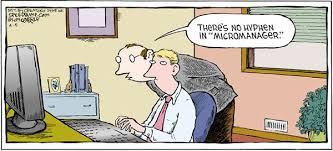
Ever been in a situation where somebody says, I trust you to do the work, but then when you turn around, you notice your manager looking over your shoulder? The corporate world is replete with micromanagers. Sadly, many organizations prefer these managers because they seem to be in control. While they may produce results in the short-term, in the long-run, they leave a trail of destruction in their path.

The research is clear: According to the Harvard Business Review, micromanagement can be a costly style as it leads to decreased productivity and innovation, reduced morale and trust, as well as high staff turnover. Steve Jobs was also aligned with that thinking when he said, “It doesn't make sense to hire smart people and then tell them what to do. We hire smart people so they can tell us what to do.”

Here Is Why Micromanaging Is Ineffective:

People require autonomy over their work. After all, liberty and freedom are enshrined in our American values and should therefore extend to the workplace. Bestselling author Daniel Pink would argue that people are most satisfied when they are challenged and in control of four aspects of their job – task (what people do), time (when they do it), technique (how they do it), and team (who they do it with).

Something as simple as giving employees the autonomy to determine their own schedule can make a huge difference and provide a much-needed morale boost. The Stanford Economic Department showed productivity results rising a whopping 12.5% when people could work from home. Additionally, people took fewer sick days and were 50% less likely to quit. The simple fact is that the dreaded 9-5 schedule created under the Industrial Revolution era is quickly becoming obsolete in the knowledge economy.

We are born with biologically-based differences that dictate how well we thrive in different circumstances. For most people, peak performance is high in the morning, dips in the afternoon, and recovers in the early evening. Meanwhile, there are those who churn out their most masterful work at night, while the rest of the world sleeps. In Daniel Pink’s book, When: The Scientific Secrets of Perfect Timing, he lays out a treasure trove of data that shows how your cognitive abilities change throughout the day. The implication is that accommodations should be made for people depending on when they work best. For example, if they are craving a mid-afternoon run because it would add a burst of energy to their day, then why shouldn’t that need be obliged?

Why Else Might Micromanaging Be So Pervasive And What Can We Do About It?

1. It could be a breakdown in the fundamentals of delegation. Sometimes there is a lack of clarity in explaining the nature of the work to be done and why it should be done. There could be different ideas on what an outcome can look like. This can be addressed by making sure there is 2-way communication, so the targets to achieve are clear from the outset. Showing an example of success and the metric to measure it can go a long way.

2. Managers may be inexperienced in how to employ best practices. Moving from an individual contributor to a manager is an often-neglected transition, which does not allow them to get the necessary training. Having first-time manager training programs can help with this issue.

3. Some managers may never have had an example to follow. People usually learn how to lead from their previous bosses so they could just be emulating their styles. Having the opportunity to apprentice with a model manager or even collaborate with a great leader on projects so they can explain how they do things and why they do it would be a significant learning opportunity.

4. A great management tool called ROWE (results-oriented work environment) co-created by Jody Thompson and Cali Ressler offers a fantastic solution. It states that employees are paid for results (output) rather than the number of hours worked. It does not matter when people show up, it is more about getting the job done.

Being a good manager does not mean controlling every aspect of the work cycle. It takes great power in giving your team members latitude to make exciting discoveries that will have a more significant and long-lasting impact on you and your organization.

Thought of the day: “A leader is best when people barely know they exist when their work is done, their aim fulfilled, they will say: we did it ourselves.” -Lao Tzu, Daoist Founder

Q: In what areas of your work would you like your managers to grant you autonomy? Comment and share with us, we would love to hear your thoughts!

As a leadership development and executive coach, I work with leaders to develop their excellence, contact me to explore this topic further.

As a leader, how do you ensure you don’t micromanage?

As a leader, how do you ensure you don’t micromanage?

This blog is designed to showcase researched-based success principles coupled with my interpretations and practical applications to help you reach your greatest potential and unlock leadership excellence.

The first rule of kindness – be kind to yourself

After you have made a mistake, what do you say to yourself? “I am a joke, I can never get it right, everybody is laughing at my failure.” Or is it more along these lines, [voice pitch and tone now softened] “Gee, that was funny how I messed up, this is going to make for an interesting story, I’ll get it right next time.” There is a crucial distinction to be made between screwing up and being a screw-up; so why can’t we easily see that? Author and Cofounder Ben Horowitz may have the answer when he said: “by far the most difficult skill for me to learn as CEO was the ability to manage my own psychology.”

Indeed, the most important conversation you can have is with yourself. How we treat ourselves makes a big difference in how we succeed, attack challenges, and thrive in this world. Dr. Barbara Fredickson explains when the mind is cynical, the brain operates purely in a fight or flight mode, but when the mind is positive, we employ our full range of intellectual, social, and emotional resources to find new ways of seeing and doing things. She indicates that the latter approach makes it easier to bounce back from setbacks and achieve what was once only imagined.

There is a concept in psychology called the Positivity Ratio, which states that you need three pieces of praise for every bit of negativity because the latter has more weight than the former. In fact, the most successful marriages require a higher ratio in that they are more likely to succeed when the balance is 5-1 and the highest performing teams need even more, 6-1 as shown by a study in the Harvard Business Review. As you can see, in all varieties, there is always at least one piece of criticism because these sentiments are also valid, it is just that the critical judgment needs to be greatly overshadowed by kinder words. So the next time you are thinking about saying something harsh to yourself, be sure to follow it up with as little as three pieces and as many as six for good measure.

What Are Some Ways to be Kind to Ourselves?

1. Fill your mind with positivity. Journaling for five minutes every day about any of the following topics can help: What am I grateful for, what makes me happy, or what are my strengths? We can almost always find our good fortune if we look for it and that will put us in a gentler mood.

2. Compliment others. How about starting your day with a positive email to somebody thanking him/her? Or, what would it be like if you started your conversation with a compliment? Abe Lincoln aptly noted, “men will stand a good deal when they get a compliment.” Truth is, we feel better and are nicer to ourselves when we know we have made others feel good.

3. Do good deeds. CEO Anthony Robinson has a “random act of kindness” practice. Every so often, he would leave money with the Starbucks barista to pay for another person’s coffee. For him, it feels terrific to see somebody else smile.

4. Keep track of compliments that people give you. This is a practice I started several years ago. It is such an effective pick-me-up when you can scroll through to get a reminder of just how amazing others think you are.

When you wake up in the morning, you should be intentional with how you want to treat yourself, and when you are choosing between being kind or mean, change the options to be between being kind or kinder. How much more vibrant and flourishing would your life be if your positivity ratio was 10-1? Let’s go!

Q: What things do you do to engender more positive self-talk? Comment and share with us, we would love to hear your kind thoughts!

Thoughts for today: “A man is what he thinks about all day long, how can he be anything else.” -Emerson

“Be kind to yourself, because you will never speak more to anyone else than you speak to yourself.” -Naman Gupta

As a leadership development and executive coach, I work with leaders to strengthen their self-compassion skills, contact me to explore this topic further.

How kind are you to yourself? How can you be even kinder?

How kind are you to yourself? How can you be even kinder?

This blog is designed to showcase researched-based success principles coupled with my interpretations and practical applications to help you reach your greatest potential and unlock leadership excellence.

How Accurate Are You In Judging Your Performance?

I’m going to go out on a limb here and state that most of us likely know somebody with an overrated assessment of their capabilities. Often, it is a coworker who thinks that he/she is the team’s MVP, when in fact by every objective measure, this individual performs well below average.

Interestingly, this phenomenon does not just limit itself to the workplace, but permeates our everyday life, from family members to close friends and yes, even ourselves. In Jimmy Kimmel’s Late Night Talk Show live news segments, he asks questions to random pedestrians containing false premises, such as their opinion on a brand that does not exist. What’s shocking is how much confidence some participants display in advocating for that nonexistent brand almost as if they were founders of the product.

Is it really possible that someone can be so unaware or even delusional about their abilities? A resounding yes, according to psychologist David Dunning and Justin Krueger who offer the Dunning-Kruger Effect. Their research showed that people who are least competent at a task often incorrectly rate themselves as high-performers because they are too ignorant to know otherwise.

Dunning and Kruger provide two explanations for how the unskilled became so unaware. People rarely receive negative feedback about their abilities in everyday life because nobody wants to be the bearer of bad news. However, if their poor performance goes unaddressed, the cycle repeats. A second reason is that if they are not shown the work of other great performers, they cannot vividly see the comparison, which only perpetuates their underperformance.

Thankfully, there are steps we can take to immediately begin to address our pockets of incompetence:

1. Seek out a qualified mentor or professional coach to keep you in check. If one is not available, ask a trusted friend or coworker for honest feedback so you can get an objective view of yourself. You can even take a 360-degree assessment, so you get multiple perspectives on your performance.

2. Continue to learn so you can fill critical knowledge gaps. You can compare yourself today to how you were six months ago and ask, how much have I improved, how much have I learned?

3. Consider how your thinking may be flawed by asking questions to increase understanding. Perhaps specific responses can cause you to challenge your views.

The next time someone is gloating about abilities that they are still yet to master, ask them about their thoughts on the Dunning-Kruger Effect. It could be the first step toward a more honest assessment of their capabilities and a catalyst for personal growth and development.

Quote of the day: “Real knowledge is to know the extent of one’s ignorance” - Confucius

Q: What is an area where you feel you may be overestimating your abilities? Comment and share your thoughts with us, we would love to hear from you!

As a leadership development and executive coach, I work with leaders to strengthen their self-awareness skills, contact me to explore this topic further.

Don’t fall prey to the Dunning-Kruger Effect.

Don’t fall prey to the Dunning-Kruger Effect.

When the going gets tough, take a brain break

“Living is not for the weak,” a quote attributed to the DC comic Green Arrow. While this statement may seem over the top, we can all agree that life can be pretty taxing at times; grappling with its unending list of impossible demands while dodging a steady supply of curveballs.  Failing to find a way to develop the capacity and resolve to deal with these challenges can quite literally take us to our breaking point.

As someone who often pushes the limits towards my personal growth, I am constantly in search of methods that allow me to keep up with my ambitious personal goals while also avoiding burnout. One of the most effective ways I have discovered is to invest in my myself to replenish my energy.  Stephen Covey’s bestseller, “7 Habits of a Highly Effective People,” describes Habit Seven: “Sharpen The Saw” as seeking continuous renewal personally and professionally.  He explains the things you should do each day in the dimensions of the body, mind, heart, and spirit to feel rejuvenated so you are able to do your best work. Simple activities such as exercise, eating well, having an enjoyable conversation, reading a book, or watching a movie can have massive positive effects.  In doing so, you will find that you are better equipped to help yourself and others.

In the book Leadership: In Turbulent Times, historian Doris Kearns Goodwin chronicles effective ways leaders would replenish their energy.

Abe Lincoln went to the theater over 100 times during the Civil War and was criticized for it.  People wondered how he could see a show in the midst of war.  For Lincoln, watching Henry IV and imagining himself in the War of the Roses was the necessary escape from politics that created relief from his crushing anxiety. While Teddy Roosevelt was leading the country through challenges of the Industrial Revolution and the burgeoning gap between the rich and poor, he found time every afternoon for a 2-hour tennis match, a strenuous hike, or a wrestling competition. The physical activity complemented his mental labor. During World War II, Franklin D. Roosevelt hosted a daily cocktail party and his one rule was that nobody could talk about the war.  Interestingly, it was when he was on a 10-day fishing trip in 1940, before the US entered the war, that he devised his famous lend-lease solution, a way for the US to help the British war effort without violating neutrality.

Whether it involves strengthening your spirit the way Lincoln sought entertainment, or your heart the way FDR yearned for a connection with others, or your body, the way Teddy frequently exercised,  they all found time every day for renewal.  When you work smarter and not harder, you can view your challenges through a refreshed and positive lens which in turn allows you to navigate even your toughest difficulties. 

Q: How do you disconnect and relax when you are stressed or feeling overworked?  Share your thoughts with us, we would love to hear!

Quote for the day:  “Almost everything will work again if you unplug it for a few minutes, including you.” Anne Lamott

How do you restore your energy levels to do your best work?

How do you restore your energy levels to do your best work?

This blog is designed to showcase researched-based success principles coupled with my interpretations and practical applications to help you reach your greatest potential and unlock leadership excellence.

A 3-Point Guide to Addressing Your Weaknesses

Japanese writer Haruki Murakami said, “All of us are imperfect human beings living in an imperfect world.” In essence, we all have weaknesses that become exposed at different points in our lives; so, the real question is what do we do about them, or should we even do anything at all?  Let’s dive in!

There are many schools of thought on how we should approach our weaknesses.  Sadly, most people lack the courage to make the hard choices that are likely to yield the best results.  However, I have discovered that if we are open-minded and determined, we can slowly chip away at some of our less enviable attributes. 

In his bestselling book, Principles, Ray Dalio discusses some strategies for dealing with your weaknesses.

1. For starters, you can deny them.  While this is the obvious path of least resistance because it keeps your ego intact, it is really the worst route to take because one simply cannot improve upon that which one fails to confront or chooses to ignore.

2.  You can accept them and aim to turn them into strengths.  This could be a great option if the strength you are trying to acquire is consistent with your natural abilities. For example, you might be an extrovert who loves speaking about important issues and sharing your message with people in one-on-one situations.  But, let’s say you have avoided giving speeches to large audiences for a variety of reasons such as low confidence; then, it would be a great idea to devote additional time to making progress in this area.  What is a small step you can take to give a presentation to an audience that may not necessarily be your target group so the stakes are low?

Conversely, if you choose to transform a strength that goes against the grain of who you are at your core, you could wind up expending effort in the wrong place.  A great example would be when Michael Jordan left the NBA to establish a career in the MLB.  All things considered, he was just an average baseball player, but the amount of time he would have had to devote to dominating the sport, in the way he did basketball, would not have been worth it. Instead, his time would have been better spent returning to basketball, which is what he did and ended up winning additional championships.  The key is, if you are a 7/10 in natural abilities and interest, trying to go to a 9 or 10 makes sense.  If you are a 2 or 3, or even a 5 or 6 in ability, trying to go to a 10 is a mighty feat and often a futile endeavor. It’s not to say you will not get there eventually, but in the end, would it be worth the extra investment that could be earmarked for something else that would yield greater and more meaningful results? Finding the answer may lie in whether the skill development is in alignment with your true passion and purpose. Only you know the answer.

3. Finally, you can choose to accept your weaknesses and find ways around them.  Dalio argues that this path is the easiest and most viable, yet the one least followed.  Being a good manager means having a great understanding of your team’s composition so you can pull in particular people for specific jobs.  Their fortes serve to supplement your weaknesses.  In fact, all successful people know when to ask for the help of others who possess strengths in areas they lack. This is where those personality assessments, such as The Big Five or Myers Briggs comes into play because you can always aim to have the right people doing the appropriate work. An excellent leader knows how to utilize a perceived weakness of one of their team members for the right job. As Psychologist David Kipper would argue, a weakness can be a flip side to the strength. For example, if you have a hard time seeing the nitty-gritty of getting things done, it may be because you have a strength of being a big-picture thinker. Therefore, being used more for the macro and less for the micro can be a huge help to your organization.

Q: Which of these approaches or any others have you used in the past to address a weakness of yours? Share your comments with us; we would love to hear!

Quote for today: “A hero is someone who, in spite of weakness, doubt or not always knowing the answers, goes ahead and overcomes anyway.” -Christopher Reeve

As a leadership development and executive coach, I work with leaders to strengthen their weaknesses, contact me to explore this topic further.

How do you tackle your weaknesses?

How do you tackle your weaknesses?

This blog is designed to showcase researched-based success principles coupled with my interpretations and practical applications to help you reach your greatest potential and unlock leadership excellence.

Tags

Getting Unstuck

It’s common to feel stuck at times.  To ask, what is my next big move?  Am I merely going around in circles? 

One may attribute feeling stuck to having too many dreams or not knowing which one to pursue first, a sort of paralysis by analysis.  In other instances, the reluctance to take the first step stems from not knowing what you want or whether it is aligned with what you are meant to be doing.  While the path forward may seem elusive, there is this overriding feeling of being late to where you need to be. 

One key to breaking the impasse is to stop fixating on rigid timelines and listen more to what we want to do over what we have to do.  The truth is, there is no place that you “have to” be by the end of the year or decade.  When we tell ourselves that we need x, y, and z before an arbitrary deadline, we could start to do things against our natural interests.  Sure, understanding the macro life picture is important, however, it’s more crucial to focus on your next 24 hours and exercise discipline to do one thing really well that fuels your development and aligns with your values.  It is that action that will put you in a position to find answers to bigger questions along your journey that will allow you to paint more specifics to that grand vision.

Brandon Stanton, the author of Humans of New York, shared a time when he felt like he was walking in tar.  He had just dropped out of the University of Georgia as a business major because he lacked the zeal for his classes.  Not knowing what his next move was, he decided to stop focusing on the big question of “what am I going to do with my life?” Instead, he opted to pursue an activity that would nourish his soul and for him, that was taking pictures.  In conjunction, he started to work on something else that mattered to him which was getting an education in a subject he thoroughly enjoyed.  This was essential because he had this overwhelming feeling of falling behind academically since he had always done the bare minimum to pass in both high school and college.

To reach his new learning goals, he committed to reading 100 pages per day, whether it took two or five hours, that was how he was going to spend the chunk of his days for the next several years. While reading, he became fascinated with biographies and history.  That new interest in people combined with his love of photography led him to found the photoblog site - Humans of New York, which has a following of over 25 million fans.   

When you prioritize your development, great things happen, and what you are meant to be doing becomes clearer.  Stop dwelling unhealthily and only on the big picture and start creating discipline in each day. That action will give you the necessary data you need for purposeful breakthroughs.

Q: What’s one thing that you do every day toward your personal development?   How disciplined are you with it? We would love to hear your comments!

Quote of the day: “You may not control all the events that happen to you, but you can decide not to be reduced by them.” - Maya Angelou

As a leadership development and executive coach, I work with leaders to get unstuck, contact me to explore this topic further.

How can you achieve a small win ?

How can you achieve a small win ?

This blog is designed to showcase researched-based success principles coupled with my interpretations and practical applications to help you reach your greatest potential and unlock leadership excellence.

Never Arrive Late Again With This Easy Hack

Even with generating anxious and unpleasant feelings for all parties involved, lateness is an occurrence that has plagued the best of us time and time again. So why does it happen and what can we do about it? In 1979, renowned economist Daniel Kahneman and Amos Tversky proposed the Planning Fallacy.  It states that people are lousy at figuring out how much time they will take to complete something because they overestimate their abilities and underestimate the degree to which they are estimating, since they think they can do more than they actually can.

Say for instance, you were supposed to meet a friend at 2pm downtown.  Since it only takes 40 minutes to get there, you calculate a 1:20pm departure to arrive in the nick of time, right? Well, let’s examine that logic a bit closer.  Here are some of the assumptions you may have made in your decision: a) you will get dressed in time and out the door by said time, b) the trains are running smoothly and you make your transfer, c) there will be no amazing subway entertainers who distract you resulting in missing your stop and d) you will be able to walk the 3 blocks with no foot traffic from the congested streets, and avoid the myriad of other random popups. 

Here are some strategies to overcome the planning fallacy:

1. Add 50% Additional Time. The trick is to remain cognizant of the potential to be late while planning for the worst-case scenario; then, the probability of being late immediately begins to dwindle. So, go ahead and assume that you may not be able to find that coveted shirt that you had been wanting to wear or that the trains are going to be slow. Just by adding 50% extra time to your original estimate; in this case - aiming to leave at 1:00pm instead of 1:20pm will significantly improve your punctuality.

The same challenges arise with intellectual tasks as people are not good at estimating how long it will take to get something done because of an optimism bias. You may think, of course, I can complete the book by the end of the year; after all, I am smart and capable and will get it done.  Unfortunately, people are often really poor judges of their abilities.  A good way to address this is to gather more information, which in turn allows for better planning.  Getting an outside perspective to see how long it will actually take can be helpful.  That may include talking to a published author so you can learn about all of the smaller steps in the book writing process that you may not know of or you may have overlooked. 

When Danielle Kahneman was planning on collaborating with other professors to write a textbook on morals for his university, he thought it would have been completed in about two years; but the Dean, who had seen so many professors in his position before, said it would be more like 3-5 years.  In his experience, about 40% of professors who started a massive collaborative project similar to this one did not finish.  Indeed, the Dean was right as it ended up taking them much longer to complete because they based their timeline on the best-case scenario and did not factor in the general vicissitudes of life including divorce, death, and bureaucratic obstacles that slowed the work of the team.

2. Add a buffer for the unknown. We absolutely cannot plan for every scenario, but a good way to reduce stress is to create an additional allowance for unexpected events that can potentially put a wrinkle in our schedules. 

3. Use the 10/90 Rule. Another way to be a more effective planner would be to invoke what Brian Tracy dubbed the 10/90 Rule for personal effectiveness.  He notes that when you spend 10% of your time planning and organizing your work before you begin, you will save 90% of the time in getting the job done once you get started.  Lots of good things happen when you think on paper. 

These three strategies - a) adding 50% additional time, b) creating space for the unknown, c) and utilizing the 10/90 rule can help in combating the planning fallacy.

Q: What are your favorite hacks to achieve punctuality in your work?

Quote of the day: "Amateurs talk about strategy, professionals talk about logistics."  -General Omar Bradley

As a leadership development and executive coach, I work with leaders to strengthen their planning skills, contact me to explore this topic further.

Anticipate and Avoid the Planning Fallacy

Anticipate and Avoid the Planning Fallacy

This blog is designed to showcase researched-based success principles coupled with my interpretations and practical applications to help you reach your greatest potential and unlock leadership excellence.

Role models are critical to our growth

We all need somebody to emulate, someone to push us to our next level and demand the best from us…a role model. 

Think about three people who fascinate you and study them, synthesize their best efforts, add your own twists and use them to march forward with passion and purpose.  Having visible examples of the extraordinary heights human beings are able to reach can inspire us to make the most of our lives.

One of my personal role models is Leonardo da Vinci. He was born out of wedlock during a time when being illegitimate was debilitating because in order to climb the socio-economic ladder, one had to come from a distinguished family. However, he was determined to overcome his common origins.  He had a code that he lived by, “if circumstances hold you back, always find another way to achieve your goals.”  So, Leonardo became an apprentice in Verrocchio’s workshop and got to learn from one of the best.  Legend has it that after Verrocchio saw one of his art pieces of an angel; he never painted again because his student had eclipsed his capacities. 

Leonardo believed it is only the mediocre apprentice that does not surpass his teacher.  He was not just an amazing painter, but had talents in every area – he was a sculptor, architect, musician, mathematician, engineer, inventor, anatomist, cartographer, writer, and much more. As somebody with a voracious appetite for learning, I aspire to be as much of a generalist as he was because I believe the best innovations happen when you can intersect disparate ideas from a variety of fields.

Role models are sources of inspiration to propel you to greatness.  The aim is not to become a carbon copy of your role model, instead, you should assess his/her value and then find that point of departure where you take your unique approach.

Q: Who is your role model? Comment and share your thoughts with us, we would love to hear from you!

Quote of the day: “Being a role model is the most powerful form of educating… too often fathers neglect it because they get so caught up in making a living they forget to make a life.” -John Wooden, Championship Coach

As a leadership development and executive coach, I work with leaders to strengthen their skills, contact me to explore this topic further.

Who are your role models?

Who are your role models?

This blog is designed to showcase researched-based success principles coupled with my interpretations and practical applications to help you reach your greatest potential and unlock leadership excellence.

6 Common Mistakes to Avoid When Giving Feedback (Feedback Series 3/4)

From the workplace to the kitchen table, giving and receiving feedback is part of everyday life. Whether you’re supporting someone on their path to growth or navigating your own development, feedback serves as a critical waymark — a signal that recalibrates direction. But over the years, I’ve learned something important: not all feedback is created equal. Some feedback accelerates growth. Some stalls it. And some quietly erodes trust.

Below are five common mistakes to avoid if you want your feedback to truly make a difference.

1. Make Feedback Immediate. Feedback loses power as time passes. The longer the gap between behavior and conversation, the weaker the learning link becomes. Memory fades. Context blurs. What could have been precise calibration turns into a vague summary.

Research shows that proximity strengthens learning. When feedback follows closely after the behavior, people can clearly connect action to impact. The moment is fresh. Reflection is sharper. Adjustment is easier.

Don’t wait for the “right time” — create it. A brief conversation — “Can we debrief that meeting for a minute?” — is far more effective than saving feedback for a future review. When feedback becomes real-time course correction, growth accelerates.

2. Replace Sporadic Feedback with Ongoing Dialogue.  Learning is not an annual event — and feedback shouldn’t be either. When confined to performance reviews, feedback becomes retrospective rather than developmental. Telling someone how they performed last year rarely improves how they perform next week. Performance research increasingly supports continuous conversations over episodic evaluation. Development happens through consistent iteration.

Shift from “performance review” to “performance dialogue.” Regular check-ins normalize feedback, reduce anxiety, and make it part of how work gets done — not a special event. When feedback is embedded in everyday leadership, improvement becomes continuous rather than occasional.

3. Swap Broad Statements for Specific Ones.   Vague feedback is forgettable feedback. Saying, “You did a great job on that presentation,” offers encouragement — but no guidance. Without clarity on what worked, the participant has no roadmap for replicating success.

Effective feedback pinpoints the behavior that drove the outcome. Was the introduction engaging because it used humor to immediately involve the audience? Did the data storytelling simplify a complex issue? Did the clear call-to-action strengthen credibility?

Specificity turns praise into strategy. When people understand exactly what created impact, they can repeat it intentionally — and that’s how performance becomes consistent rather than accidental.

4. Praise the Behavior, Not the Person. Carol Dweck’s research in Mindset reveals a powerful truth: what you praise shapes how people grow. In her studies, children praised for intelligence — rather than effort — showed decreased motivation over time. This reinforced a fixed mindset — the belief that ability is largely innate and limited. When success is tied to talent, people become more cautious. They protect their identity instead of stretching their capability. In contrast, praising effort, strategy, preparation, and resilience reinforces a growth mindset — the belief that skills are developed through deliberate practice and learning. The focus shifts from who someone is to what they did.

In the workplace, this distinction matters. Instead of “You’re brilliant,” try, “The way you structured that argument made a complex issue easy to understand.” Instead of “You’re a natural presenter,” say, “Your preparation and clarity strengthened your credibility.” When you praise process over personality, you reinforce behaviors people can repeat — and you build a culture where excellence feels developed, not predetermined.

5. Make Feedback a Two-Way Street.  Feedback should not be a monologue — it should be a conversation. When leaders invite dialogue, they gain insight into context, intentions, and unseen constraints that may shape the behavior. A simple question like, “How do you see this?” transforms feedback from evaluation into collaboration and increases ownership of the outcome.

This is also the moment to acknowledge progress. Calling out improvement reinforces effort and builds momentum. When people see that growth is recognized, they are far more motivated to continue developing.

When done well, feedback is not correction — it is cultivation. It clarifies expectations, reinforces standards, and strengthens relationships. Avoiding these common mistakes ensures that your feedback builds capability rather than defensiveness, momentum rather than hesitation. The goal is not to comment on performance, but to shape it — intentionally and consistently.

6. Only Giving Corrective Feedback. Many leaders think feedback is synonymous with correction. It isn’t. If the only time you offer feedback is when something is wrong, people begin to associate feedback with failure. Over time, that erodes trust and increases defensiveness. Positive reinforcement is not fluff — it is data. When you catch someone doing something right and name it specifically, you accelerate learning by clarifying what should be repeated.

The research is compelling. Dr. John and Julie Gottman, known for studying married couples, found they could predict relationship success with over 90% accuracy based largely on the ratio of positive to negative interactions — roughly 5:1. While the workplace isn’t a marriage, the principle translates: high-performing relationships are built on more reinforcement than correction. Constructive feedback improves performance; reinforcement sustains it.

You see this in elite environments as well. Steve Kerr’s coaching of Steph Curry emphasizes confidence, trust, and joy — even during shooting slumps. Rather than focusing solely on mistakes, Kerr reinforces the behaviors he wants repeated. Leaders who master both correction and reinforcement create teams that are not only accountable, but confident.

Reflection Question: What are some other common feedback mistakes you have identified?  Comment and share your thoughts with us, we would love to hear from you!

Quote of the day:  “True intuitive expertise is learned from prolonged experience with good feedback on mistakes.”  – Daniel Kahneman

The next blog in this series 4/4 will focus on building a feedback culture.

As a leadership development and executive coach, I work with leaders to strengthen their feedback skills, contact me to explore this topic further.

How do you give feedback?

How do you give feedback?

This blog is designed to showcase researched-based success principles coupled with my interpretations and practical applications to help you reach your greatest potential and unlock leadership excellence.

The Art of Receiving Feedback (feedback series 2/4)

Does this sound like you? A friend or co-worker offers you some constructive feedback and you immediately feel flustered. Maybe you defend yourself. Maybe you mentally discredit the source. Maybe you decide — quite maturely, of course — that this person will not be receiving a holiday card this year. You are not alone.

Receiving feedback can feel surprisingly personal. Even when it’s well-intentioned, our brains often interpret it as a threat — to our competence, our reputation, or even our belonging. What begins as data quickly turns into emotion. It is also hard because few people enjoy hearing critical comments about themselves.  It could make you feel undervalued, disappointed, discouraged, and even disengaged.  Moreover, defensiveness usually ignites - you may consider the source of the feedback and assess whether they are “qualified” to provide it in the first place, or you may reject the comments on the basis of not being relevant to you, but more reflective of the messenger than you.

But if your objective is growth, feedback is not optional. Even the most self-aware leaders have blind spots. We all operate with incomplete data about how we are experienced by others. An external perspective — especially from someone willing to care personally and challenge professionally — is one of the fastest ways to accelerate development.

High performers don’t merely tolerate feedback. They mine it.

1. Reframe Feedback as Valuable Data. Feedback is not a verdict on your worth; it is data about your impact. You don’t have to agree with every piece of feedback — and you certainly don’t have to act on every suggestion — but dismissing feedback outright eliminates an opportunity to examine it. Instead of asking, “Is this true?” try asking, “What part of this might be useful?”  Curiosity reduces defensiveness and invites learning.

2. Create a Feedback Loop . If you know one area you want to improve, enlist help intentionally. For example, perhaps you suspect that you over-explain in meetings. Ask a trusted colleague to observe and give you immediate feedback afterward. Not in six months and not in a performance review, but immediately. Real-time calibration accelerates behavior change. Your partner can: Flag when you drift into too much detail, reinforce moments when you are concise, and help you experiment with alternative approaches. Progress happens through iteration.

3. Ask Better Questions. If you’re unsure where to focus, create a go-to question that invites actionable insight. For example:

·      What is one thing I could start or stop doing to make it easier to work with me?

·      What behavior, if adjusted, would elevate my leadership most?

·      Where do you see me unintentionally limiting my effectiveness as a great leader/coworker?

·      What’s one new behavior I can adopt that you see really successful in senior leadership?

These questions signal maturity and confidence. Leaders who seek feedback demonstrate that growth matters more than ego.

4. Practice the Discipline of Receiving. Receiving feedback well is a skill — and it requires intentional practice. It involves both cognive and emotional regulation.

A. Pause Before Responding. Don’t be overly reactive to feedback. Pause. Breathe. Let the initial emotional surge subside before you speak. You do not want to inadvertently push well-meaning people away.  When you are soliciting feedback, defensiveness is self-defeating.

B. Listen Fully.   Sometimes our inner commentator dictator hijacks the conversation by responding too soon, thereby missing the benefit of the full report. Practice active listening: focus on understanding more than replying or defending.

C. Thank the Messenger. Even if the feedback is difficult. Even if you disagree. Gratitude keeps doors open. Saying “thank you” does not mean you agree with every point. It does not mean the feedback is accurate, complete, or even well delivered. It simply acknowledges that someone took the time — and often the courage — to share their perspective. That distinction matters. When you say “thank you,” you are appreciating the input, not validating it as objective truth. You are signaling professionalism, openness, and composure — while still retaining your autonomy and discernment. Mature leaders understand this nuance. They can hold two ideas at once: I appreciate you sharing this, and I will decide what to do with it. Gratitude keeps the relationship intact. Discernment protects your judgment.

5. Filter, Verify, and Triangulate. Not all feedback will be equally insightful — some may reflect the giver’s preferences, biases, or experiences. That doesn’t make it useless, but it does require discernment. Tips for filtering feedback well:

·       A. Separate diagnosis from prescription. People are often better at identifying patterns than at suggesting exactly how to fix them. Listen for the underlying insight rather than just the recommended course of action.

·       B. Triangulate across sources. If a theme emerges in feedback from multiple people, that’s stronger evidence for something worth attending to.

·       C. Don’t take everything literally. People’s advice might work for them, but not for you. There are many paths to developing a skill; your job is to figure out what aligns with your strengths and context. Some leaders even use a trusted group of colleagues — a feedback cabal — to help them interpret and refine feedback before acting on it.

 6. Manage the Emotional Impact. Leadership is imperfect people leading imperfect people. You will sometimes receive feedback that is clumsy, incomplete, poorly delivered, or even partially inaccurate. That does not mean it is useless — and it does not mean you need to react in the moment.

Receiving feedback is not just a cognitive task; it is an emotional one. Our brains are wired to interpret criticism as a potential threat — to our competence, our reputation, or even our sense of belonging. When that threat response activates, we may feel defensive, embarrassed, irritated, or suddenly compelled to explain ourselves. None of those reactions make you a bad leader. They make you human. The goal is not to eliminate the reaction, but to regulate it.

If you feel emotionally activated, pause before responding. Slow your breathing. Give yourself a moment to let the initial surge pass so you can hear the message more clearly. Resist the urge to interrupt, justify, or “give feedback about their feedback.”

If you need space, say: “This is a lot to take in. I’d love some time to process it. Can we reconnect tomorrow so I can respond thoughtfully?” That response demonstrates maturity. It protects the relationship and preserves your ability to learn — even when the delivery is imperfect. When you manage the emotional impact in the moment, you stay in leadership rather than slipping into reaction.

 7. Build Recovery Practices That Support You. Even after you’ve handled the moment well, feedback can linger. For some leaders, the emotional charge fades quickly. For others, it stays with them long after the conversation ends. If you tend to feel feedback deeply, build intentional recovery practices that help you reset before drawing conclusions or taking action.

After a difficult conversation, you might go for a walk, work out, or engage in a calming ritual such as a warm bath. You might talk with someone who knows and loves you — someone who can help you separate emotion from insight and remind you of the fuller picture of who you are. The goal is not to dismiss the feedback, but to process it in a way that allows you to return to it with clarity and perspective.

 If you receive written or survey-based feedback, consider asking a trusted partner to review it first and distill the core themes. This can prevent you from over-indexing on one sharply worded comment or isolated critique. It is rarely about any single sentence. It is about patterns.

 Strong leaders do not pretend feedback doesn’t affect them. They create systems to metabolize it well. When you regulate and then recover, you give yourself the best chance to extract insight rather than react from emotion.

8. Respond Productively – Even When You Disagree.  Sometimes you will disagree with the feedback. There is a way you can be discerning about it.  For example, you may be held accountable for outcomes where you don’t have full decision rights. You may be trying new approaches that haven’t yet gained traction. You may simply see the situation differently.

Disagreement is not the problem. How you handle it is.  You will want ownership and collaboration, not defensiveness.  You might say:

· “I really want to make progress here. I’ve tried A and B, and they’re not moving the needle. Can we brainstorm other approaches that you’ve seen work?”

· “Here’s what I’m working on. What else would you add?”

These responses signal commitment without surrendering your perspective. They show you are focused on improvement — not ego.  You can also enlist your leader more directly:  · “If you notice me practicing this skill, I’d appreciate you letting me know how it’s landing.”  That simple request turns feedback into a partnership. It shifts the dynamic from episodic judgment to iterative growth.  Strong leaders don’t treat disagreement as a standoff. They use it to clarify expectations, deepen alignment, and co-create better outcomes.

When you can receive information about how your behavior is impacting others — especially when that impact was not your intent — it becomes a gamechanger. Too many professionals move through their careers unaware of the signals they are sending. Feedback makes the invisible visible, and with visibility comes agency. Agency creates choice, and choice creates improvement. Leaders who stay open and discerning — even when the message is uncomfortable — don’t just grow faster; they build trust, strengthen relationships, and expand their influence. It’s not just a personal skill. It’s a leadership advantage.

Reflection question: What is one behavior in which you would like to get feedback?  Who could you ask to be your feedback partner?

Quote of the day:God gave us all weaknesses and it is a blessing to find out about them” -Ben Horowitz, CEO and Author

The next blog in this series 3/4 will focus on 5 common mistakes to avoid when giving feedback.

As an executive coach, I help leaders strengthen both sides of the feedback equation — giving it with clarity and receiving it with maturity — so performance and trust grow together, contact me to learn more.

Feedback is a gift

Feedback is a gift

This blog is designed to showcase researched-based success principles coupled with my interpretations and practical applications to help you reach your greatest potential and unlock leadership excellence.

The Art of Giving Feedback (Feedback series 1/4)

Giving feedback is one of the most powerful accelerators of development. Without it, people rely on guesswork and delayed course correction. With it, learning compresses. What might take months to refine can improve in weeks. Feedback, when delivered well, sharpens awareness — and awareness dramatically increases the speed of growth.

Yet many leaders still default to the familiar “sandwich” approach: cushioning corrective feedback between two compliments. While well-intentioned, this method often backfires. As Roger Schwarz has noted in Harvard Business Review, praise used as a buffer can feel strategic rather than sincere. Instead of softening the message, it heightens anticipation. The recipient waits for the “but,” and the positive feedback loses credibility.

There’s also a cognitive reality at play. Humans process negative information more intensely than positive information — a phenomenon known as negativity bias. Even when praise is included, the corrective portion tends to dominate memory and emotion. The praise fades. The criticism lingers. And the anxiety both parties hoped to avoid quietly increases.

Great feedback is not about cushioning discomfort. It is about creating clarity, reinforcing standards, and strengthening trust. But here’s what often gets missed: Before the structure, model, and wording, you must set the emotional frame.

Set the Emotional Frame Before the Content.

How you open a feedback conversation often determines how it lands. The first sentence signals whether the person should prepare to defend themselves — or lean in to grow, whether they will feel judged or invested in. A strong emotional frame communicates belief, partnership, and forward momentum. You might say:

·       This may be hard to hear, and I know it’s going to lead to a good outcome.

·       In the spirit of development, I believe in you, and know you can be better than you are / capable of more.

·       I want to live in a world where your impact matches your insight.

This works because it signals care, shared future, confidence in growth, and reduces the threat without diluting the truth. When people feel respected and believed in, their nervous system softens. And when defensiveness lowers, learning accelerates.

From there, structure matters. Below are four frameworks that help leaders move beyond outdated tactics and deliver guidance that truly accelerates growth: Magical Feedback, Radical Candor, the SBI Method, and Intent vs. Impact. Feel free to draw inspiration from any of these methods and develop your own approach to deliver your message effectively.

1. Magical Feedback

It is more appetizing to discard that stale sandwich and replace it with magical feedback, a concept pioneered by a group of psychologists from Stanford, Yale, and Columbia. Their research showed that this particular form of feedback used by a teacher boosted student effort and performance immensely.  It was what researchers called “wise feedback.”

The formula has 3 components: connection, belonging, and high standards.  When those signals are present together, feedback stops feeling like a threat and starts feeling like an investment.

1. Connection: Employees are far more open to feedback when they believe their leader is genuinely invested in them — yet many don’t feel that. A 2018 Employee Financial Wellness Survey found that only 44% of employees believe their manager truly cares about them as a person. When that foundation is missing, feedback feels like evaluation, not development.

Connection doesn’t require over-sharing; it requires intention. When people feel seen, understood, and supported in their growth, feedback lands as partnership rather than criticism. Find out what drives your people.

 2. Belonging:  Humans are wired for belonging, and the workplace is no exception. Gallup’s research shows that employees who report having a “best friend at work” are more engaged and more committed — not because of popularity, but because connection builds trust. When people feel part of a community, they are more open to feedback and more willing to grow.

Framing feedback within belonging reinforces a powerful message: You matter here, and your work affects others. Reminding someone that their teammates rely on them and that their contribution shapes collective success shifts feedback from personal critique to shared accountability — and that makes development far more likely.

 3. Recognizing high standards: The final ingredient is expectation. Wise feedback does not lower the bar — it reinforces it. It communicates two messages at once: the standard matters, and I believe you can meet it. Without standards, feedback feels optional. Without belief, it feels discouraging.

When delivering feedback, name the expectation clearly and anchor it in the person’s strengths. “We hold a high bar for this role, and you’ve shown the capability to meet it.” When leaders pair challenge with confidence, feedback becomes motivating rather than deflating — and that belief often becomes self-fulfilling.

 Separately, each aspect has a limited effect, but when combined, it creates feedback magic and can sound like this. “I’m invested in your growth and in the quality of work we produce together. You’re someone the team relies on for strong, timely execution. When deadlines slip, it creates downstream delays and affects trust with our partners. I know you’re capable of meeting the standard we’ve set — what adjustments would help you get back on track?”

2. Radical Candor

Another powerful approach is Kim Scott’s Radical Candor concept - the ability to care personally while challenging directly. At its core, this model is less about structure and more about stance. It asks leaders to hold two truths at the same time: I respect you, and I won’t lower the standard.

When leaders avoid challenge in the name of kindness, performance suffers. When they challenge without demonstrating care, trust erodes. Radical Candor lives in the tension between the two.

Author Lara Hogan offers a practical way to operationalize this mindset: combine a clear observation with impact, genuine curiosity, and a forward-looking request. The goal is not just to point something out — it’s to strengthen the working relationship and align expectations going forward.

1. Behavior Observation. Describe the who/what/when/where of the situation in which you are referring, keying in on the behavior.

2. Impact.  Describe how your employee’s behavior/action has impacted you or others.

3. Question.  Ask a question to learn more about the situation. This part is important because you can learn about the person’s intentions and draw attention to the intention-impact gap, which can build trust and understanding.

4. Request. You can offer a request for using the desired behavior going forward and even provide an example or co-create one.

That can sound like this: Example 1: When Beth spoke, I noticed you jumped in and cut her off when she was not done explaining her idea (BEHAVIOR). That interruption made her feel like her ideas were not validated, and she will be more hesitant to share next time (IMPACT).  Can you help me understand why you jumped in that way (QUESTION)? How could you give somebody the space to complete their thoughts for next time? Or, I’d like you to give somebody the space to complete their thoughts so they feel safe sharing (REQUEST).

Example 2: When we were in the executive steering committee yesterday, you presented the results as solely your team’s success. I noticed you didn’t mention the cross-functional partners who helped deliver the outcome. I’m concerned that may unintentionally create friction with peers and limit long-term collaboration. Can you walk me through how you were thinking about positioning the win? Going forward, I’d like us to highlight shared ownership when appropriate — it strengthens influence and credibility across the organization.”

3. SBI Method

The SBI approach comes from the Center for Creative Leadership and is one of the cleanest ways to deliver feedback without triggering defensiveness.

S (Situation) - Describe the specific context. When and where did this occur?

B (Behavior) - Describe the observable behavior. Stick to what you saw or heard - not interpretations. Don’t assume you know what the other person was thinking.

I (Impact) - Describe the impact the behavior had on you, the team, or the outcome.

Example 1: In today’s sprint planning meeting (Situation), when the roadmap questions came up, you jumped in quickly and answered most of them before the product managers had a chance to weigh in (Behavior). The impact was that a few team members disengaged, and we may have missed some alternative approaches because the discussion moved forward quickly (Impact).” How did you see that moment? What adjustments might help us get broader input next time?

This feedback ends with inquiry, which keeps it developmental and forward-focused.

Whether the issue is subtle dominance in meetings or a more visible emotional reaction, the structure remains the same.

Example 2: In yesterday’s decision meeting (Situation), after Andy shared his perspective, you raised your voice, left the room abruptly, and closed the door forcefully behind you (Behavior). The impact was that the conversation stopped, Andy felt shut down, the team appeared unsettled, and we were unable to reach a decision (Impact).

By focusing on observable facts and impact — rather than labeling someone as “angry” or “unprofessional” — you keep the conversation grounded in behavior. That makes it easier to address what happened and discuss expectations going forward.

4. Intent v. Impact

Many feedback conversations derail because intent and impact get conflated. When someone feels their character is being questioned, the conversation shifts from growth to self-protection.

Most professionals do not intend to undermine colleagues or silence ideas. Yet even well-meaning actions can create unintended consequences. When feedback implies motive — “You don’t care,” “You’re dismissive,” “You’re controlling” — people defend their identity. When feedback separates intent from impact, it allows both parties to stay focused on outcomes rather than accusations.

The discipline is simple but powerful: acknowledge likely positive intent, then name the observable impact.

For example: “I know your intention in meetings is to move us forward efficiently and keep the discussion focused. When you summarize and redirect before others have finished speaking, the impact is that some team members disengage and hold back ideas. That limits the diversity of thinking we say we value. How can we preserve speed while also ensuring broader input?”

Or, in a more personal moment: “I know it’s not your intent to shut me down, and I believe you value a free exchange of ideas. When you jump in before I’ve finished articulating my thoughts, the impact on me is that I go quiet. I start to feel rushed and question whether I should share unless my ideas are fully formed. I’d like us to find a way to keep discussions efficient while still creating space for contribution. What would you suggest?”

In both examples, intent is respected, impact is clearly articulated, and the path forward is collaborative. By separating motive from outcome, feedback shifts from blame to alignment — and alignment is where meaningful change begins.

As a leader, providing guidance is more than part of your job; it is the right thing to do. When you offer thoughtful feedback, you are investing in someone’s ability to grow. John Stuart Mill captured this idea in On Liberty, “The source of everything respectable in man… is that his errors are corrigible… The whole strength and value of human judgment depending on the one property that it can be set right when it is wrong.” In other words, growth depends on our ability to correct mistakes. Feedback is what makes that correction possible. When you guide someone to improve their work, you don’t just improve performance — you strengthen their capacity to think, judge, and contribute at a higher level.

Quote of the day: “Criticism, like rain, should be gentle enough to nourish a [person’s] growth without destroying [their] roots.” – Frank A. Clark

Reflection Question:  What approach do you use in providing feedback to your team? Comment below; we’d love to hear from you.

[The next blog in this series 2/4 will focus on The Art of Receiving Feedback]

As a Leadership Coach, I partner with leaders to help them provide effective feedback to their direct reports, teammates, and other stakeholders, contact me to learn more.

Feedback delivery makes all the difference

Feedback delivery makes all the difference

This blog is designed to showcase researched-based success principles coupled with my interpretations and practical applications to help you reach your greatest potential and unlock leadership excellence.

The Unspoken Power of a Job Half-Done

What if you discovered that the old adage “you should always finish what you have started” is actually not the best advice in all cases?  In fact, stopping something midway could yield some incredible benefits such as causing a surge of creativity.

Ernest Hemingway, a prolific writer who entreated his readers to over 25 classics during his lifetime capitalized on this trick.  One of his favorite productivity techniques would be to stop his writing not at the end of a paragraph, but in the middle of a sentence.  This act created a sense of incompletion that became the driving force to compel him to resume his work the following day with immediate momentum.   

Generally, we like to finish what we have started and when we leave things incomplete, we feel bad about it and are eager to reconcile those feelings. This phenomenon is called the Zeigarnik Effect, which describes the tendency to remember unfinished tasks over finish ones. If we tell ourselves we are done with work for the day and still have incomplete tasks, our mind will eagerly anticipate the moment when we can continue the job with vigor and to a close. 

However, there is one important condition to the Zeigarnik Effect - the undertaking needs to be interesting enough so that it compels a conclusion. If we find the assignment unattractive due to its banality or degree of difficulty, the Zeigarnik Effect ceases to occur.  So, the next time, you are in the middle of your work, try stopping midway and see what direction you take your ideas the following day; you may be surprised with the additional and always-welcomed boost of motivation and ingenuity.

Quote of the day: “Make an empty space in any corner of your mind, and creativity will instantly fill it.” -CEO Dee Hock

Q: What activities in your life do you see this application having the biggest impact? Comment and share with us below; we would love to hear from you!

The Zeigarnik Effect

The Zeigarnik Effect

This blog is designed to showcase researched-based success principles coupled with my interpretations and practical applications to help you reach your greatest potential and unlock leadership excellence.