Building a Feedback Culture (Feedback Series 4/4)

 Most leaders say they want a culture of feedback. Far fewer design the conditions that make it possible – and fewer still model the behaviors that make it safe to speak up when the truth is inconvenient, uncomfortable, or politically risky.

A feedback culture is not about “more feedback.” It’s about better feedback—clearer, timelier, and flowing in every direction: up, down, and across. It’s what happens when an organization treats learning as its operating system rather than as a quarterly initiative. The objective is simple: reduce performance drift before it compounds. In fast-moving environments, the absence of feedback doesn’t create harmony—it creates misalignment, blind spots, and quiet underperformance.

The encouraging reality is this: feedback cultures don’t emerge from slogans or town halls. They are intentionally built through leadership modeling, shared standards, and repeatable rituals that make candor normal and growth expected.

Why Feedback Culture Is a Business Strategy

Executives don’t invest in feedback culture because it’s nice. They invest because it drives performance.

When teams can speak candidly, correct quickly, and learn in real time, decision quality improves, execution accelerates, and collaboration strengthens. Psychological safety — the ability to take interpersonal risks such as asking questions, admitting mistakes, or challenging a senior leader — has repeatedly been linked to team effectiveness, as shown by Google’s Project Aristotle research. When candor is present, small issues surface early. When it’s absent, problems compound quietly.

And in hybrid or distributed environments, the stakes are even higher. Distance magnifies misalignment. Assumptions replace clarification. Feedback delays become execution delays. In fast-moving organizations, a feedback culture is not just a cultural advantage — it is a risk management system. It shortens the time between misstep and correction, turning potential performance drag into learning velocity.

The Executive Operating Model: 5 Moves That Build Feedback Culture

1. Set the expectation: “Feedback is How We Work.” Culture follows what leaders consistently reward and reinforce. If feedback is optional — especially upward — it will be avoided. In many organizations, people only share difficult perspectives with peers or subordinates, and the “chain of command” becomes a real barrier. To build a feedback culture, leaders must reset that assumption: everyone, at every level, is expected to both give and receive feedback.

Adam Grant has pointed to practices at organizations like Bridgewater Associates, where one of the performance criteria is the willingness to constructively challenge those above you—not as a sign of insubordination, but as evidence that you are engaged, thoughtful, and committed to better outcomes. To earn strong performance evaluations, team members are expected to constructively challenge their boss — and sometimes their boss’s boss. That signals that candid dialogue is not just tolerated — it’s valued.

Make it explicit: feedback is not punishment or a personality critique; it is how the organization stays aligned with standards, surfaces risks early, and learns faster than the market changes. 

2. Model It First: Invite Feedback Publicly and Respond Well.  If leaders want candor, they must make it safe to be candid with them. Culture is shaped less by what executives say and more by how they respond when challenged. If upward feedback is met with defensiveness, silence quickly follows.

Amy Edmondson reminds us that psychological safety is not about being nice — it is about creating conditions where people can speak openly, admit mistakes, and question decisions without fear. Leaders signal this safety through visible behavior, especially in moments of discomfort.

A simple practice works: ask, “What’s one thing I should start, stop, or continue as your leader?” Then reflect it back, thank the person, and name one action you will take. When leaders model learning publicly, they make candor normal — not risky.

3. Build rituals, Not Heroics.  Feedback cultures don’t depend on occasional acts of managerial courage. They depend on rhythms. When feedback is embedded into how work gets done, it stops feeling personal and starts feeling procedural — part of the system rather than a special event.

Examples executives can institutionalize:

• Project post-mortems / retros focused on learning (not blame). After major initiatives, ask: What worked? What didn’t? What will we do differently next time? Keep the spotlight on process and decision quality — not personal fault. The goal is institutional learning, not reputational damage. 

• Quarterly “ways of working” check-ins. Step back from deliverables and examine team norms, collaboration patterns, and decision-making effectiveness. What’s helping us move faster? Where are we creating friction? Culture drifts unless it’s recalibrated.

• Meeting “red card” norms. Establish a shared agreement that anyone — regardless of level — can pause a meeting to surface a missed perspective, unclear assumption, or unspoken concern. This protects decision quality and signals that thoughtful dissent is valued.

• Peer calibration moments. As a leadership team, regularly ask: What should we do more of? Less of? What’s one behavior that would elevate our collective effectiveness? When executives model feedback among themselves, it legitimizes it for the entire organization.

This reflects where performance management has been moving for years: away from episodic evaluation and toward continuous development and coaching. 

4. Teach Feedback as a Leadership Capability (Not a Personality Trait).  One of the most common breakdowns in feedback culture is the assumption that people should “just know” how to give and receive feedback well. They don’t. Feedback is a skill — and like any leadership capability, it must be taught, practiced, and refined.

Executives should equip leaders with practical tools: how to reduce perceived threat while increasing clarity; how to anchor feedback in observable behavior and future action; and how to receive feedback without defensiveness — or the opposite extreme, over-correcting in ways that dilute confidence. These are learnable disciplines, not personality traits.

Training matters because it protects the culture from predictable extremes. On one end, “brutal honesty” masquerades as courage and erodes trust. On the other hand, conflict avoidance preserves comfort but sacrifices performance. Teaching feedback as a capability creates a middle path: candid, respectful, and focused on shared standards.

5. Align Incentives: What Gets Rewarded Gets Repeated.  Culture follows reinforcement. If high performers are promoted solely for results while leaving relational damage in their wake, feedback will quietly disappear. People learn quickly what truly matters. When numbers outweigh behavior, candor goes underground.

Conversely, when leaders who develop others, invite challenge, and raise collective standards are visibly recognized, feedback becomes a mark of leadership maturity. It signals that how results are achieved matters as much as the results themselves.

A practical executive question to anchor this shift: Who on this team consistently raises the bar and elevates others in the process? The answer reveals the culture you are actively rewarding — and the one you are building.

The Two Most Common Culture Killers

Even strong leadership teams can unintentionally erode a feedback culture. The breakdown rarely comes from bad intent; it comes from inconsistent signals.

 1. Mistaking pressure for performance.  Ambition and pace are healthy. But when pressure turns into intimidation, people stop surfacing problems and start managing optics. They choose silence over scrutiny. In that environment, information gets filtered, risks stay hidden, and leaders lose access to the very data they need most. Strong cultures prove that you can demand excellence while still making it safe to question, challenge, and course-correct. In high-performing cultures, intensity and openness coexist.

2. Encouraging Candor — Then Penalizing It.  Nothing kills feedback faster than retaliation, subtle or overt. If a team member challenges a decision and later finds themselves excluded from key conversations, the lesson spreads quickly. Culture is not defined by what leaders say in town halls; it’s defined by what people can do without negative consequences. When candor is safe, it scales. When it’s risky, it disappears. 

A feedback culture is one of the highest-leverage investments an executive team can make. It speeds learning, strengthens trust, and prevents small misalignments from becoming expensive problems. Done well, feedback stops being a dreaded moment and becomes a shared operating principle: we tell each other the truth, because we’re committed to excellence—and to each other.

Reflection Question: Where is feedback currently getting stuck in your organization - upward, peer-to-peer, or cross-functional? What is one ritual you could introduce in the next 30 days to unblock it?  Comment and share below; we’d love to hear from you.

Quote of the day: “Pain + reflection = progress.” – Ray Dalio

As an executive coach, I help executive teams build high-standard, high-trust feedback cultures. If you’d like to embed feedback into how your leadership team operates (not just how you talk about it), contact me to explore this topic further.
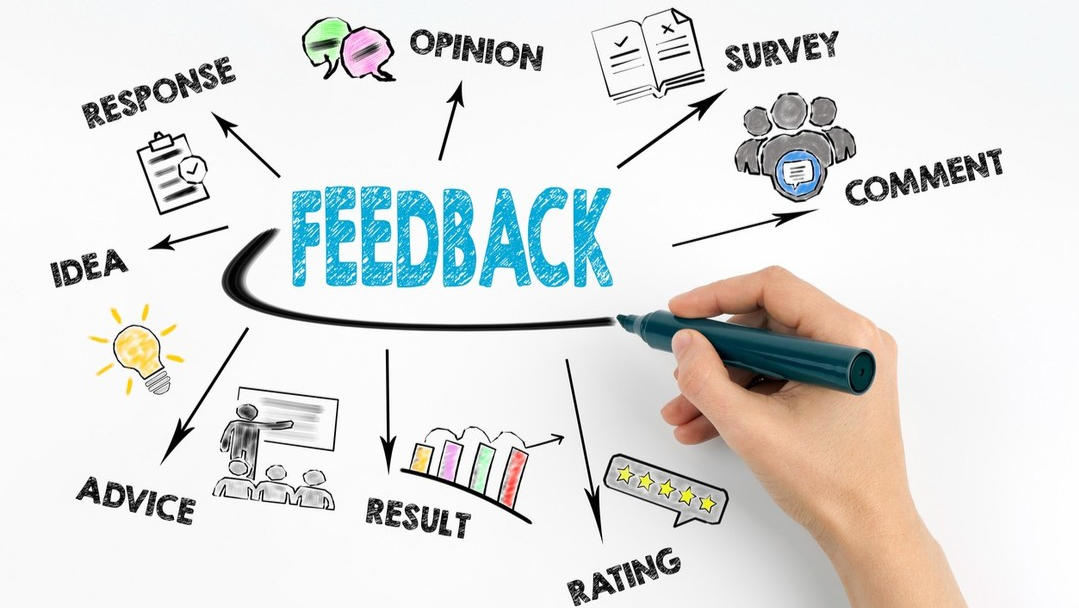
How do you build a great culture of feedback?

Choose to Double Down on Support (Firing Series 2/3)

Deciding to fire can be a tough choice.  In the last blog, we explored the reasons to let an employee go, this blog will focus on another option, which is to support your teammate rather than letting them go. 

Reasons to support:

If an employee is not working out, instead of rushing to release that individual, you may want to closely examine the reasons.  Choosing to support somebody by providing guidance for improvement, switching roles to better match their skillset with the work requirements, or changing teams could be the better decision.

Here are some common reasons why you would choose to support:

1. You were unclear in the hiring process.  If you did not articulate the job requirements and if you did not train the person adequately in the onboarding process where they are set up for success and feel safe to contribute fully, you should not let them go because you are responsible for the mismatch.  You should give the person adequate training so they can win at their job.  This happens often because we are usually rushed to fill a position and choose to throw them into the fire with insufficient training. 

2. Realignments and changing business needs.  If the business has changed and you need people to do other jobs than what they were doing or if you had a realignment and created a skillset redundancy, you may want to move them to another team where they would be able to contribute and thrive.  Quality employees with a fierce skillset and a learning mindset can be versatile enough to be plugged in elsewhere to positively impact; they are people you want around.   

3. You haven’t managed them well.  Part of the success of an employee can be attributed to how well they were supported.  Have you had regular meetings with your direct reports to learn what the person needs to succeed?  Did you set clear goals and expectations measurable with benchmarks, deadlines, and a general timeline for completion?  Have you had 1:1 performance discussions where they are aware of their gaps, and you have created an opportunity to invite their feedback to co-create an improvement plan with outcomes you are both comfortable with?  Have you had career development conversations where you understand their short and long-term motivations and dreams and how they fit into their daily tasks while offering opportunities for support, growth, and development?  Generally, have you be a present thought partner enabling their best efforts and clearing the path for their great work?

If you had a conversation about their struggles, do they know exactly what to do to improve and how their progress will be measured?  Are they aware of the timeframe and consequences if they break the mutual agreement and no improvement is made?  Making sure you have done everything possible to support the person matters.  If they still have not responded well to your assistance, it could be time to let the person go.

4. You have not kept them engaged or focused on their wellbeing.  If an employee is underperforming, it could be because they are burned out.  They were given more work than exceeded any normal human’s capacity, so they shut down, and so did their productivity.  They could also be dissatisfied with their job if they have been in the same role for a long time and they have not been offered growth opportunities, they could be showing signs of dissatisfaction and frustration by not being challenged by the work.  They can also feel resentful that all their time will work and they do not feel supported in having time off.  Before Thanksgiving of 2014, President Joe Biden sent a memo to his staff reminding them that he did not expect nor want anyone to “miss or sacrifice important family obligations for work.”  That includes celebrations, such as birthdays, anniversaries, or weddings, and time needed to step away from work due to an illness or death in the family.  For Biden, it was an unwritten rule for staff to take time off for family responsibilities or wellbeing.  Workplace cultures where there are no boundaries between professional and personal and being on call 24 hours a day is not conducive to bringing out people’s best, even if it may seem so in the short term.  Rewarding overwork can be detrimental.

If you have determined that you did not offer the proper support in the hiring and managing stage or if the business needs have changed, there are still things you can do to support your people.  You can move them laterally to another team or another department to thrive and be happier somewhere else in the company.  Perhaps, they have been in sales for many years, and an opportunity in marketing would be a breath of fresh air.  Or maybe they're in tech or operations and would enjoy a career pivot to manage people because that is what gives them joy.  Separate the person from the job; if they are great, where else can they go?  Around 2010, Salesforce wondered how it can be just as easy to transfer within the company as it was to leave so they created their Opportunity Open Market initiative.  After each quarterly release, software developers could transfer teams.  There would be internal job fairs to facilitate that transfer.  It allowed people to find what motivated them and work on things that challenged and excited them.  It was so successful it was integrated into the broader company. 

5. Your company decided to downsize.  If the company is going through a tough time and you must make layoffs, what are all your options?  The worst thing about layoffs is not only what you do to the people who leave but what you do to the people who stay because if they are expected to double their work, they end up losing trust and getting frustrated.  Is it possible to do furloughs instead?  Would anybody on the team volunteer for some time off because they are in a more comfortable position and wish to spend more time with their family?  Can you agree on a temporary promotion freeze if it means your people can stay?  Every team and culture are different; choose what works best for the group.  In 2008, Barry-Wehmiller got hit hard with the recession, so the board put pressure on the CEO Bob Chapman to make layoffs, but he believed in committing to people like family.  Instead of firing, he had each person take a four-week furlough of unpaid vacation whenever they wanted because he thought it was better for all to hurt a little than some to suffer a lot with a job loss.  As a result, morale went up because people saw leaders sacrificing the numbers for them, so they started to care for each other even more.  They would give their days to those who could not afford furlough.

Deciding to let a team member go is a big choice.  Before pulling the trigger, you want to understand the reasons for doing it and whether they are valid.  If the fault lies with you, you should give your people another chance.  If you have genuinely done everything you can, but they still show no improvement, do not waste one more minute.

Quote of the day: “On what high-performing companies should be striving to create: A great place for great people to do great work.” - Marilyn Carlson, former CEO of Carlson Companies

[The next blog in this firing series 3/3 will focus on the best ways to go about firing]

As a Leadership Coach, I partner with leaders to support their teams to do their best work, contact me to learn more.

How can you partner with your direct report for success?

How can you partner with your direct report for success?

The Art of Receiving Feedback (feedback series 2/4)

Does this sound like you? A friend or co-worker offers you some constructive feedback and you immediately feel flustered. Maybe you defend yourself. Maybe you mentally discredit the source. Maybe you decide — quite maturely, of course — that this person will not be receiving a holiday card this year. You are not alone.

Receiving feedback can feel surprisingly personal. Even when it’s well-intentioned, our brains often interpret it as a threat — to our competence, our reputation, or even our belonging. What begins as data quickly turns into emotion. It is also hard because few people enjoy hearing critical comments about themselves.  It could make you feel undervalued, disappointed, discouraged, and even disengaged.  Moreover, defensiveness usually ignites - you may consider the source of the feedback and assess whether they are “qualified” to provide it in the first place, or you may reject the comments on the basis of not being relevant to you, but more reflective of the messenger than you.

But if your objective is growth, feedback is not optional. Even the most self-aware leaders have blind spots. We all operate with incomplete data about how we are experienced by others. An external perspective — especially from someone willing to care personally and challenge professionally — is one of the fastest ways to accelerate development.

High performers don’t merely tolerate feedback. They mine it.

1. Reframe Feedback as Valuable Data. Feedback is not a verdict on your worth; it is data about your impact. You don’t have to agree with every piece of feedback — and you certainly don’t have to act on every suggestion — but dismissing feedback outright eliminates an opportunity to examine it. Instead of asking, “Is this true?” try asking, “What part of this might be useful?”  Curiosity reduces defensiveness and invites learning.

2. Create a Feedback Loop . If you know one area you want to improve, enlist help intentionally. For example, perhaps you suspect that you over-explain in meetings. Ask a trusted colleague to observe and give you immediate feedback afterward. Not in six months and not in a performance review, but immediately. Real-time calibration accelerates behavior change. Your partner can: Flag when you drift into too much detail, reinforce moments when you are concise, and help you experiment with alternative approaches. Progress happens through iteration.

3. Ask Better Questions. If you’re unsure where to focus, create a go-to question that invites actionable insight. For example:

·      What is one thing I could start or stop doing to make it easier to work with me?

·      What behavior, if adjusted, would elevate my leadership most?

·      Where do you see me unintentionally limiting my effectiveness as a great leader/coworker?

·      What’s one new behavior I can adopt that you see really successful in senior leadership?

These questions signal maturity and confidence. Leaders who seek feedback demonstrate that growth matters more than ego.

4. Practice the Discipline of Receiving. Receiving feedback well is a skill — and it requires intentional practice. It involves both cognive and emotional regulation.

A. Pause Before Responding. Don’t be overly reactive to feedback. Pause. Breathe. Let the initial emotional surge subside before you speak. You do not want to inadvertently push well-meaning people away.  When you are soliciting feedback, defensiveness is self-defeating.

B. Listen Fully.   Sometimes our inner commentator dictator hijacks the conversation by responding too soon, thereby missing the benefit of the full report. Practice active listening: focus on understanding more than replying or defending.

C. Thank the Messenger. Even if the feedback is difficult. Even if you disagree. Gratitude keeps doors open. Saying “thank you” does not mean you agree with every point. It does not mean the feedback is accurate, complete, or even well delivered. It simply acknowledges that someone took the time — and often the courage — to share their perspective. That distinction matters. When you say “thank you,” you are appreciating the input, not validating it as objective truth. You are signaling professionalism, openness, and composure — while still retaining your autonomy and discernment. Mature leaders understand this nuance. They can hold two ideas at once: I appreciate you sharing this, and I will decide what to do with it. Gratitude keeps the relationship intact. Discernment protects your judgment.

5. Filter, Verify, and Triangulate. Not all feedback will be equally insightful — some may reflect the giver’s preferences, biases, or experiences. That doesn’t make it useless, but it does require discernment. Tips for filtering feedback well:

·       A. Separate diagnosis from prescription. People are often better at identifying patterns than at suggesting exactly how to fix them. Listen for the underlying insight rather than just the recommended course of action.

·       B. Triangulate across sources. If a theme emerges in feedback from multiple people, that’s stronger evidence for something worth attending to.

·       C. Don’t take everything literally. People’s advice might work for them, but not for you. There are many paths to developing a skill; your job is to figure out what aligns with your strengths and context. Some leaders even use a trusted group of colleagues — a feedback cabal — to help them interpret and refine feedback before acting on it.

 6. Manage the Emotional Impact. Leadership is imperfect people leading imperfect people. You will sometimes receive feedback that is clumsy, incomplete, poorly delivered, or even partially inaccurate. That does not mean it is useless — and it does not mean you need to react in the moment.

Receiving feedback is not just a cognitive task; it is an emotional one. Our brains are wired to interpret criticism as a potential threat — to our competence, our reputation, or even our sense of belonging. When that threat response activates, we may feel defensive, embarrassed, irritated, or suddenly compelled to explain ourselves. None of those reactions make you a bad leader. They make you human. The goal is not to eliminate the reaction, but to regulate it.

If you feel emotionally activated, pause before responding. Slow your breathing. Give yourself a moment to let the initial surge pass so you can hear the message more clearly. Resist the urge to interrupt, justify, or “give feedback about their feedback.”

If you need space, say: “This is a lot to take in. I’d love some time to process it. Can we reconnect tomorrow so I can respond thoughtfully?” That response demonstrates maturity. It protects the relationship and preserves your ability to learn — even when the delivery is imperfect. When you manage the emotional impact in the moment, you stay in leadership rather than slipping into reaction.

 7. Build Recovery Practices That Support You. Even after you’ve handled the moment well, feedback can linger. For some leaders, the emotional charge fades quickly. For others, it stays with them long after the conversation ends. If you tend to feel feedback deeply, build intentional recovery practices that help you reset before drawing conclusions or taking action.

After a difficult conversation, you might go for a walk, work out, or engage in a calming ritual such as a warm bath. You might talk with someone who knows and loves you — someone who can help you separate emotion from insight and remind you of the fuller picture of who you are. The goal is not to dismiss the feedback, but to process it in a way that allows you to return to it with clarity and perspective.

 If you receive written or survey-based feedback, consider asking a trusted partner to review it first and distill the core themes. This can prevent you from over-indexing on one sharply worded comment or isolated critique. It is rarely about any single sentence. It is about patterns.

 Strong leaders do not pretend feedback doesn’t affect them. They create systems to metabolize it well. When you regulate and then recover, you give yourself the best chance to extract insight rather than react from emotion.

8. Respond Productively – Even When You Disagree.  Sometimes you will disagree with the feedback. There is a way you can be discerning about it.  For example, you may be held accountable for outcomes where you don’t have full decision rights. You may be trying new approaches that haven’t yet gained traction. You may simply see the situation differently.

Disagreement is not the problem. How you handle it is.  You will want ownership and collaboration, not defensiveness.  You might say:

· “I really want to make progress here. I’ve tried A and B, and they’re not moving the needle. Can we brainstorm other approaches that you’ve seen work?”

· “Here’s what I’m working on. What else would you add?”

These responses signal commitment without surrendering your perspective. They show you are focused on improvement — not ego.  You can also enlist your leader more directly:  · “If you notice me practicing this skill, I’d appreciate you letting me know how it’s landing.”  That simple request turns feedback into a partnership. It shifts the dynamic from episodic judgment to iterative growth.  Strong leaders don’t treat disagreement as a standoff. They use it to clarify expectations, deepen alignment, and co-create better outcomes.

When you can receive information about how your behavior is impacting others — especially when that impact was not your intent — it becomes a gamechanger. Too many professionals move through their careers unaware of the signals they are sending. Feedback makes the invisible visible, and with visibility comes agency. Agency creates choice, and choice creates improvement. Leaders who stay open and discerning — even when the message is uncomfortable — don’t just grow faster; they build trust, strengthen relationships, and expand their influence. It’s not just a personal skill. It’s a leadership advantage.

Reflection question: What is one behavior in which you would like to get feedback?  Who could you ask to be your feedback partner?

Quote of the day:God gave us all weaknesses and it is a blessing to find out about them” -Ben Horowitz, CEO and Author

The next blog in this series 3/4 will focus on 5 common mistakes to avoid when giving feedback.

As an executive coach, I help leaders strengthen both sides of the feedback equation — giving it with clarity and receiving it with maturity — so performance and trust grow together, contact me to learn more.

Feedback is a gift

Feedback is a gift

This blog is designed to showcase researched-based success principles coupled with my interpretations and practical applications to help you reach your greatest potential and unlock leadership excellence.

The Art of Giving Feedback (Feedback series 1/4)

Giving feedback is one of the most powerful accelerators of development. Without it, people rely on guesswork and delayed course correction. With it, learning compresses. What might take months to refine can improve in weeks. Feedback, when delivered well, sharpens awareness — and awareness dramatically increases the speed of growth.

Yet many leaders still default to the familiar “sandwich” approach: cushioning corrective feedback between two compliments. While well-intentioned, this method often backfires. As Roger Schwarz has noted in Harvard Business Review, praise used as a buffer can feel strategic rather than sincere. Instead of softening the message, it heightens anticipation. The recipient waits for the “but,” and the positive feedback loses credibility.

There’s also a cognitive reality at play. Humans process negative information more intensely than positive information — a phenomenon known as negativity bias. Even when praise is included, the corrective portion tends to dominate memory and emotion. The praise fades. The criticism lingers. And the anxiety both parties hoped to avoid quietly increases.

Great feedback is not about cushioning discomfort. It is about creating clarity, reinforcing standards, and strengthening trust. But here’s what often gets missed: Before the structure, model, and wording, you must set the emotional frame.

Set the Emotional Frame Before the Content.

How you open a feedback conversation often determines how it lands. The first sentence signals whether the person should prepare to defend themselves — or lean in to grow, whether they will feel judged or invested in. A strong emotional frame communicates belief, partnership, and forward momentum. You might say:

·       This may be hard to hear, and I know it’s going to lead to a good outcome.

·       In the spirit of development, I believe in you, and know you can be better than you are / capable of more.

·       I want to live in a world where your impact matches your insight.

This works because it signals care, shared future, confidence in growth, and reduces the threat without diluting the truth. When people feel respected and believed in, their nervous system softens. And when defensiveness lowers, learning accelerates.

From there, structure matters. Below are four frameworks that help leaders move beyond outdated tactics and deliver guidance that truly accelerates growth: Magical Feedback, Radical Candor, the SBI Method, and Intent vs. Impact. Feel free to draw inspiration from any of these methods and develop your own approach to deliver your message effectively.

1. Magical Feedback

It is more appetizing to discard that stale sandwich and replace it with magical feedback, a concept pioneered by a group of psychologists from Stanford, Yale, and Columbia. Their research showed that this particular form of feedback used by a teacher boosted student effort and performance immensely.  It was what researchers called “wise feedback.”

The formula has 3 components: connection, belonging, and high standards.  When those signals are present together, feedback stops feeling like a threat and starts feeling like an investment.

1. Connection: Employees are far more open to feedback when they believe their leader is genuinely invested in them — yet many don’t feel that. A 2018 Employee Financial Wellness Survey found that only 44% of employees believe their manager truly cares about them as a person. When that foundation is missing, feedback feels like evaluation, not development.

Connection doesn’t require over-sharing; it requires intention. When people feel seen, understood, and supported in their growth, feedback lands as partnership rather than criticism. Find out what drives your people.

 2. Belonging:  Humans are wired for belonging, and the workplace is no exception. Gallup’s research shows that employees who report having a “best friend at work” are more engaged and more committed — not because of popularity, but because connection builds trust. When people feel part of a community, they are more open to feedback and more willing to grow.

Framing feedback within belonging reinforces a powerful message: You matter here, and your work affects others. Reminding someone that their teammates rely on them and that their contribution shapes collective success shifts feedback from personal critique to shared accountability — and that makes development far more likely.

 3. Recognizing high standards: The final ingredient is expectation. Wise feedback does not lower the bar — it reinforces it. It communicates two messages at once: the standard matters, and I believe you can meet it. Without standards, feedback feels optional. Without belief, it feels discouraging.

When delivering feedback, name the expectation clearly and anchor it in the person’s strengths. “We hold a high bar for this role, and you’ve shown the capability to meet it.” When leaders pair challenge with confidence, feedback becomes motivating rather than deflating — and that belief often becomes self-fulfilling.

 Separately, each aspect has a limited effect, but when combined, it creates feedback magic and can sound like this. “I’m invested in your growth and in the quality of work we produce together. You’re someone the team relies on for strong, timely execution. When deadlines slip, it creates downstream delays and affects trust with our partners. I know you’re capable of meeting the standard we’ve set — what adjustments would help you get back on track?”

2. Radical Candor

Another powerful approach is Kim Scott’s Radical Candor concept - the ability to care personally while challenging directly. At its core, this model is less about structure and more about stance. It asks leaders to hold two truths at the same time: I respect you, and I won’t lower the standard.

When leaders avoid challenge in the name of kindness, performance suffers. When they challenge without demonstrating care, trust erodes. Radical Candor lives in the tension between the two.

Author Lara Hogan offers a practical way to operationalize this mindset: combine a clear observation with impact, genuine curiosity, and a forward-looking request. The goal is not just to point something out — it’s to strengthen the working relationship and align expectations going forward.

1. Behavior Observation. Describe the who/what/when/where of the situation in which you are referring, keying in on the behavior.

2. Impact.  Describe how your employee’s behavior/action has impacted you or others.

3. Question.  Ask a question to learn more about the situation. This part is important because you can learn about the person’s intentions and draw attention to the intention-impact gap, which can build trust and understanding.

4. Request. You can offer a request for using the desired behavior going forward and even provide an example or co-create one.

That can sound like this: Example 1: When Beth spoke, I noticed you jumped in and cut her off when she was not done explaining her idea (BEHAVIOR). That interruption made her feel like her ideas were not validated, and she will be more hesitant to share next time (IMPACT).  Can you help me understand why you jumped in that way (QUESTION)? How could you give somebody the space to complete their thoughts for next time? Or, I’d like you to give somebody the space to complete their thoughts so they feel safe sharing (REQUEST).

Example 2: When we were in the executive steering committee yesterday, you presented the results as solely your team’s success. I noticed you didn’t mention the cross-functional partners who helped deliver the outcome. I’m concerned that may unintentionally create friction with peers and limit long-term collaboration. Can you walk me through how you were thinking about positioning the win? Going forward, I’d like us to highlight shared ownership when appropriate — it strengthens influence and credibility across the organization.”

3. SBI Method

The SBI approach comes from the Center for Creative Leadership and is one of the cleanest ways to deliver feedback without triggering defensiveness.

S (Situation) - Describe the specific context. When and where did this occur?

B (Behavior) - Describe the observable behavior. Stick to what you saw or heard - not interpretations. Don’t assume you know what the other person was thinking.

I (Impact) - Describe the impact the behavior had on you, the team, or the outcome.

Example 1: In today’s sprint planning meeting (Situation), when the roadmap questions came up, you jumped in quickly and answered most of them before the product managers had a chance to weigh in (Behavior). The impact was that a few team members disengaged, and we may have missed some alternative approaches because the discussion moved forward quickly (Impact).” How did you see that moment? What adjustments might help us get broader input next time?

This feedback ends with inquiry, which keeps it developmental and forward-focused.

Whether the issue is subtle dominance in meetings or a more visible emotional reaction, the structure remains the same.

Example 2: In yesterday’s decision meeting (Situation), after Andy shared his perspective, you raised your voice, left the room abruptly, and closed the door forcefully behind you (Behavior). The impact was that the conversation stopped, Andy felt shut down, the team appeared unsettled, and we were unable to reach a decision (Impact).

By focusing on observable facts and impact — rather than labeling someone as “angry” or “unprofessional” — you keep the conversation grounded in behavior. That makes it easier to address what happened and discuss expectations going forward.

4. Intent v. Impact

Many feedback conversations derail because intent and impact get conflated. When someone feels their character is being questioned, the conversation shifts from growth to self-protection.

Most professionals do not intend to undermine colleagues or silence ideas. Yet even well-meaning actions can create unintended consequences. When feedback implies motive — “You don’t care,” “You’re dismissive,” “You’re controlling” — people defend their identity. When feedback separates intent from impact, it allows both parties to stay focused on outcomes rather than accusations.

The discipline is simple but powerful: acknowledge likely positive intent, then name the observable impact.

For example: “I know your intention in meetings is to move us forward efficiently and keep the discussion focused. When you summarize and redirect before others have finished speaking, the impact is that some team members disengage and hold back ideas. That limits the diversity of thinking we say we value. How can we preserve speed while also ensuring broader input?”

Or, in a more personal moment: “I know it’s not your intent to shut me down, and I believe you value a free exchange of ideas. When you jump in before I’ve finished articulating my thoughts, the impact on me is that I go quiet. I start to feel rushed and question whether I should share unless my ideas are fully formed. I’d like us to find a way to keep discussions efficient while still creating space for contribution. What would you suggest?”

In both examples, intent is respected, impact is clearly articulated, and the path forward is collaborative. By separating motive from outcome, feedback shifts from blame to alignment — and alignment is where meaningful change begins.

As a leader, providing guidance is more than part of your job; it is the right thing to do. When you offer thoughtful feedback, you are investing in someone’s ability to grow. John Stuart Mill captured this idea in On Liberty, “The source of everything respectable in man… is that his errors are corrigible… The whole strength and value of human judgment depending on the one property that it can be set right when it is wrong.” In other words, growth depends on our ability to correct mistakes. Feedback is what makes that correction possible. When you guide someone to improve their work, you don’t just improve performance — you strengthen their capacity to think, judge, and contribute at a higher level.

Quote of the day: “Criticism, like rain, should be gentle enough to nourish a [person’s] growth without destroying [their] roots.” – Frank A. Clark

Reflection Question:  What approach do you use in providing feedback to your team? Comment below; we’d love to hear from you.

[The next blog in this series 2/4 will focus on The Art of Receiving Feedback]

As a Leadership Coach, I partner with leaders to help them provide effective feedback to their direct reports, teammates, and other stakeholders, contact me to learn more.

Feedback delivery makes all the difference

Feedback delivery makes all the difference

This blog is designed to showcase researched-based success principles coupled with my interpretations and practical applications to help you reach your greatest potential and unlock leadership excellence.