
Most leaders say they want a culture of feedback. Far fewer design the conditions that make it possible – and fewer still model the behaviors that make it safe to speak up when the truth is inconvenient, uncomfortable, or politically risky.
A feedback culture is not about “more feedback.” It’s about better feedback—clearer, timelier, and flowing in every direction: up, down, and across. It’s what happens when an organization treats learning as its operating system rather than as a quarterly initiative. The objective is simple: reduce performance drift before it compounds. In fast-moving environments, the absence of feedback doesn’t create harmony—it creates misalignment, blind spots, and quiet underperformance.
The encouraging reality is this: feedback cultures don’t emerge from slogans or town halls. They are intentionally built through leadership modeling, shared standards, and repeatable rituals that make candor normal and growth expected.
Why Feedback Culture Is a Business Strategy
Executives don’t invest in feedback culture because it’s nice. They invest because it drives performance.
When teams can speak candidly, correct quickly, and learn in real time, decision quality improves, execution accelerates, and collaboration strengthens. Psychological safety — the ability to take interpersonal risks such as asking questions, admitting mistakes, or challenging a senior leader — has repeatedly been linked to team effectiveness, as shown by Google’s Project Aristotle research. When candor is present, small issues surface early. When it’s absent, problems compound quietly.
And in hybrid or distributed environments, the stakes are even higher. Distance magnifies misalignment. Assumptions replace clarification. Feedback delays become execution delays. In fast-moving organizations, a feedback culture is not just a cultural advantage — it is a risk management system. It shortens the time between misstep and correction, turning potential performance drag into learning velocity.
The Executive Operating Model: 5 Moves That Build Feedback Culture
1. Set the expectation: “Feedback is How We Work.” Culture follows what leaders consistently reward and reinforce. If feedback is optional — especially upward — it will be avoided. In many organizations, people only share difficult perspectives with peers or subordinates, and the “chain of command” becomes a real barrier. To build a feedback culture, leaders must reset that assumption: everyone, at every level, is expected to both give and receive feedback.
Adam Grant has pointed to practices at organizations like Bridgewater Associates, where one of the performance criteria is the willingness to constructively challenge those above you—not as a sign of insubordination, but as evidence that you are engaged, thoughtful, and committed to better outcomes. To earn strong performance evaluations, team members are expected to constructively challenge their boss — and sometimes their boss’s boss. That signals that candid dialogue is not just tolerated — it’s valued.
Make it explicit: feedback is not punishment or a personality critique; it is how the organization stays aligned with standards, surfaces risks early, and learns faster than the market changes.
2. Model It First: Invite Feedback Publicly and Respond Well. If leaders want candor, they must make it safe to be candid with them. Culture is shaped less by what executives say and more by how they respond when challenged. If upward feedback is met with defensiveness, silence quickly follows.
Amy Edmondson reminds us that psychological safety is not about being nice — it is about creating conditions where people can speak openly, admit mistakes, and question decisions without fear. Leaders signal this safety through visible behavior, especially in moments of discomfort.
A simple practice works: ask, “What’s one thing I should start, stop, or continue as your leader?” Then reflect it back, thank the person, and name one action you will take. When leaders model learning publicly, they make candor normal — not risky.
3. Build rituals, Not Heroics. Feedback cultures don’t depend on occasional acts of managerial courage. They depend on rhythms. When feedback is embedded into how work gets done, it stops feeling personal and starts feeling procedural — part of the system rather than a special event.
Examples executives can institutionalize:
• Project post-mortems / retros focused on learning (not blame). After major initiatives, ask: What worked? What didn’t? What will we do differently next time? Keep the spotlight on process and decision quality — not personal fault. The goal is institutional learning, not reputational damage.
• Quarterly “ways of working” check-ins. Step back from deliverables and examine team norms, collaboration patterns, and decision-making effectiveness. What’s helping us move faster? Where are we creating friction? Culture drifts unless it’s recalibrated.
• Meeting “red card” norms. Establish a shared agreement that anyone — regardless of level — can pause a meeting to surface a missed perspective, unclear assumption, or unspoken concern. This protects decision quality and signals that thoughtful dissent is valued.
• Peer calibration moments. As a leadership team, regularly ask: What should we do more of? Less of? What’s one behavior that would elevate our collective effectiveness? When executives model feedback among themselves, it legitimizes it for the entire organization.
This reflects where performance management has been moving for years: away from episodic evaluation and toward continuous development and coaching.
4. Teach Feedback as a Leadership Capability (Not a Personality Trait). One of the most common breakdowns in feedback culture is the assumption that people should “just know” how to give and receive feedback well. They don’t. Feedback is a skill — and like any leadership capability, it must be taught, practiced, and refined.
Executives should equip leaders with practical tools: how to reduce perceived threat while increasing clarity; how to anchor feedback in observable behavior and future action; and how to receive feedback without defensiveness — or the opposite extreme, over-correcting in ways that dilute confidence. These are learnable disciplines, not personality traits.
Training matters because it protects the culture from predictable extremes. On one end, “brutal honesty” masquerades as courage and erodes trust. On the other hand, conflict avoidance preserves comfort but sacrifices performance. Teaching feedback as a capability creates a middle path: candid, respectful, and focused on shared standards.
5. Align Incentives: What Gets Rewarded Gets Repeated. Culture follows reinforcement. If high performers are promoted solely for results while leaving relational damage in their wake, feedback will quietly disappear. People learn quickly what truly matters. When numbers outweigh behavior, candor goes underground.
Conversely, when leaders who develop others, invite challenge, and raise collective standards are visibly recognized, feedback becomes a mark of leadership maturity. It signals that how results are achieved matters as much as the results themselves.
A practical executive question to anchor this shift: Who on this team consistently raises the bar and elevates others in the process? The answer reveals the culture you are actively rewarding — and the one you are building.
The Two Most Common Culture Killers
Even strong leadership teams can unintentionally erode a feedback culture. The breakdown rarely comes from bad intent; it comes from inconsistent signals.
1. Mistaking pressure for performance. Ambition and pace are healthy. But when pressure turns into intimidation, people stop surfacing problems and start managing optics. They choose silence over scrutiny. In that environment, information gets filtered, risks stay hidden, and leaders lose access to the very data they need most. Strong cultures prove that you can demand excellence while still making it safe to question, challenge, and course-correct. In high-performing cultures, intensity and openness coexist.
2. Encouraging Candor — Then Penalizing It. Nothing kills feedback faster than retaliation, subtle or overt. If a team member challenges a decision and later finds themselves excluded from key conversations, the lesson spreads quickly. Culture is not defined by what leaders say in town halls; it’s defined by what people can do without negative consequences. When candor is safe, it scales. When it’s risky, it disappears.
A feedback culture is one of the highest-leverage investments an executive team can make. It speeds learning, strengthens trust, and prevents small misalignments from becoming expensive problems. Done well, feedback stops being a dreaded moment and becomes a shared operating principle: we tell each other the truth, because we’re committed to excellence—and to each other.
Reflection Question: Where is feedback currently getting stuck in your organization - upward, peer-to-peer, or cross-functional? What is one ritual you could introduce in the next 30 days to unblock it? Comment and share below; we’d love to hear from you.
Quote of the day: “Pain + reflection = progress.” – Ray Dalio
As an executive coach, I help executive teams build high-standard, high-trust feedback cultures. If you’d like to embed feedback into how your leadership team operates (not just how you talk about it), contact me to explore this topic further.
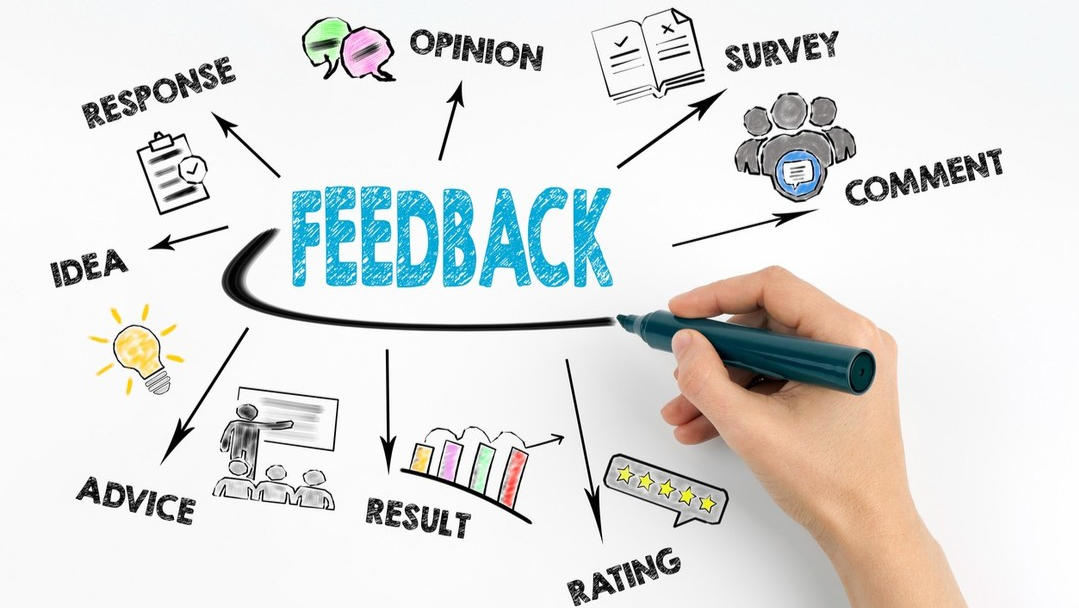
How do you build a great culture of feedback?