
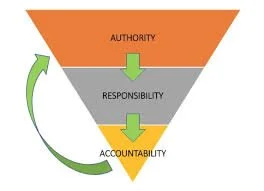
Most performance systems flow downward. Individual contributors are reviewed. Gaps are addressed. Teams reinforce standards. But accountability must run both ways.
Managers are the leverage point in any organization. They translate strategy into execution, shape culture, and filter information upward. If they are evaluated only on outcomes — and not on how they lead — the system weakens at its most critical layer.
I worked with a C-level leader who led with trust and empowerment. One of her direct reports consistently presented well in executive meetings. Updates were polished. Risks appeared managed. Below the surface, deadlines were slipping, and morale was deteriorating. Information was selectively framed. With few structural mechanisms to test what was being reported, the issue remained hidden longer than it should have. She questioned herself: Was I too trusting? The issue was not trust. It was design.
Trust without structural accountability creates blind spots. As W. Edwards Deming noted, most organizational breakdowns are systemic. When a manager can quietly erode a team while appearing effective upward, the system is incomplete.
Strong performance cultures evaluate managers not only on what their teams deliver, but on how they lead. That requires structure — not surveillance, but signal.
Several practical mechanisms create that signal:
1. Elevate the 1:1. Conversations with managers must extend beyond status updates. Ask about team health, development progress, decision clarity, and emerging risks. A manager’s ability to accurately describe their team is itself a performance indicator.
2. Create skip-level visibility. Periodic conversations two or three levels down provide perspective that filtered reporting misses. Framed as learning rather than bypassing authority, they surface friction early.
3. Observe leadership in action. Sitting in on meetings or reviewing how commitments are tracked often reveals more about leadership effectiveness than a polished summary. Meeting dynamics rarely lie.
4. Build structured feedback loops. Amy Edmondson’s research on psychological safety reminds us that people do not speak candidly simply because leaders say they welcome input. Pulse surveys and upward feedback normalize truth-telling.
5. Read the patterns in the data. Retention by manager, engagement trends, and voluntary attrition of high performers often signal leadership quality before executive dashboards do.
None of these eliminate risk entirely. But together, they reduce the likelihood that a manager can quietly degrade a team while appearing composed upward. High-trust cultures are not low-oversight cultures. They are high-clarity cultures.
When accountability flows only downward, managers become insulated. When it flows in both directions, standards become sustainable. Performance management is not only about correcting individual contributors; it is about ensuring the people entrusted with leading others are themselves being led.
Question of the Day: If a manager were filtering information from you, what structural signals would reveal it? Comment and share below; we’d love to hear from you
Quote of the Day: “Employees join companies and leave managers.” — Marcus Buckingham
As an Executive Coach, I partner with leadership teams to help them performance manage with both excellence and compassion. If you’d like to strengthen how your leaders hold standards and develop people, let’s connect
The next article in this series 5/7 will focus on managing low performers.
How do you hold managers accountable?