
If the phrase office politics makes you cringe, you’re not alone. For many high performers, it brings to mind favoritism, power plays, and promotions based more on connections than competence. But politics isn’t just a workplace nuisance - it’s part of how things actually get done. When used well, it’s a tool for influence and progress. When misused, it can erode trust, damage morale, and hold talented people back.
This first article in the series explores what office politics really is, and why understanding it matters for impact, not just advancement.
Defining Office Politics
Office politics refers to the informal ways people use influence and relationships to navigate power, push priorities, and get things done. It’s often invisible, rarely documented, and often present. It’s not inherently bad - it’s just how organizations work beneath the surface. The problem arises when politics feel exclusive, unfair, or manipulative. Learning to understand and ethically engage with these dynamics is a key leadership skill - not a betrayal of your values, but a way to amplify them.
The Research Behind the Reputation
“Political” has long been a loaded word in leadership circles, but the academic research tells a more useful story. Beginning in the late 1990s, organizational psychologist Gerald Ferris and his colleagues built a decades-long research program around a construct they called political skill — measured by the Political Skill Inventory and defined by four dimensions: social astuteness, interpersonal influence, networking ability, and apparent sincerity. Across dozens of studies, political skill has been shown to predict career success, reputation, job performance, and organizational citizenship behavior. It isn't the same as manipulation; research shows it operates through genuine relationship-building, not deception.
The takeaway for executives: political savvy isn't a euphemism for playing dirty. It's a documented, learnable competency — and leaders who dismiss it as beneath them often find themselves out-influenced by peers who understand the game they're actually playing.
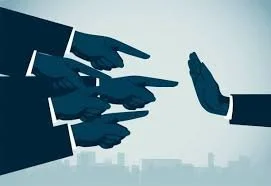
Here Are Common Ways Office Politics Can Turn Toxic.
1. Promotions Based on Proximity, Not Performance. A leader promotes their friend, someone clearly underqualified, while overlooking stronger candidates. The message to the team is that relationships can trump results, and that can be a real motivation killer.
2. Visibility Without Contribution. Certain people gain high-profile assignments by cozying up to senior leaders, not through excellence, but through flattery or shared backgrounds. They get unequal access to opportunities, and that can erode trust.
3. Power With No Accountability. Some leaders use their influence to skirt expectations; for example, they may not go into the office to work while requiring their teams to. They use their power, and that can create resentment.
4. Reputation Sabotage. Whether through gossip, half-truths, or strategic undermining, some individuals aim to damage others’ credibility to advance. For example, imagine spreading a rumor that your colleague’s project lacks scientific evidence to get yours chosen. This behavior is the antithesis of teamwork and quickly erodes trust.
5. Self-Serving Decision-Making. Decisions masked as “business necessity” often hide personal agendas. When layoffs, reorganizations, or project shifts seem politically motivated, you may have been let go because someone didn't like you; morale and trust take a nosedive.
6. Proximity Bias in the Hybrid Era. This is the newest, and now one of the most consequential, forms of politics leaders face. Gallup data show hybrid employees now spend roughly 2.3 days a week in the office, up from 2021 levels — and the leaders who are physically present simply get noticed more. Recent workforce research finds that most executives admit they notice in-office work more readily than remote contributions, and that a meaningful share of a typical performance rating reflects that visibility bias rather than actual impact. The practical result: fully remote employees are promoted at a notably lower rate than in-office peers doing comparable work, even when performance is equal. Return-to-office mandates don't reliably fix this — some research links them to higher attrition without closing the visibility gap. For executives building hybrid teams, this is no longer a fringe issue. It's one of the most common and least examined forms of political dysfunction in organizations today.
The Impact of Toxic Politics. Unchecked political dysfunction isn’t just unpleasant - it’s bad for business. Some of the ripple effects include:
· Inefficiency: Decisions are delayed or distorted by personal agendas instead of strategy and facts.
· Silos: Teams prioritize their turf over organizational goals, creating competition instead of collaboration.
· Low Morale: When effort and integrity go unnoticed while political players thrive, disillusionment grows.
· Declining Performance: Metrics take a backseat to maneuvering. Long-term strategy gets sacrificed for short-term power plays.
· Attrition: Donald Sull's widely cited MIT Sloan Management Review research on the Great Resignation found that a toxic corporate culture is roughly ten times more powerful than compensation in predicting whether a company loses talent. Unchecked political dysfunction is one of the clearest drivers of that toxicity.
The reality is this: whether you're an emerging leader or a seasoned executive, building political savvy is essential. It’s not about playing games. It’s about understanding the human systems at play so you can navigate them ethically, strategically, and with impact.
Quote of the day. "Power is not given to you. You have to take it." -Beyoncé
Reflection Question: What invisible rules or dynamics are shaping who gets heard and seen in your workplace - and how are you showing up in response? Comment and share below; we’d love to hear from you.
The next article in the series 2/3 we will explore the various types of political organizations and what leaders can do.
As a leadership development and executive coach, I work with leaders to better navigate office politics, contact me to explore this topic further.
How do you play politics?