
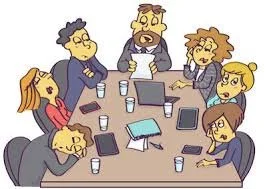
Let's be honest. For most leaders, the word "meeting" doesn't ignite excitement — it sparks dread. You know the ones. The meeting that could have been an email. The one where half the room is visibly checked out. The agenda that was a laundry list of everything and a plan for nothing. The two hours that left you more behind than when you started. And yet — your calendar keeps filling up.
The Real Problem Isn't Too Many Meetings
Here's what most leaders get wrong: they think the answer is fewer meetings. Cancel the recurring ones. Block focus time. Declare a no-meeting Wednesday.
Those aren't solutions. They're symptoms of a deeper problem. The issue isn't the meeting — it's the leadership behind it. Poorly run meetings don't happen because people are busy. They happen because no one has been intentional about what a great meeting actually looks like.
Think about it this way: we invest enormous energy developing strategy, coaching talent, and building culture. Then we hand all of that off to meetings—the very place where strategy gets communicated, talent gets developed, and culture gets demonstrated—without a second thought. That's the gap.
What Bad Meetings Are Really Costing You
The financial cost alone is eye-opening. When you put a room full of senior leaders together, you're spending real organizational resources — and most of the time, the ROI isn't there. But the deeper cost is cultural.
Bad meetings drain energy. They signal — loudly — that people's time isn't valued. They create what researchers call Meeting Recovery Syndrome: that lingering frustration after a bad meeting that follows people back to their desks, into their next conversation, and sometimes all the way home.
Over time, a culture of bad meetings becomes a culture of disengagement. People stop contributing. They show up physically but check out mentally. They lose trust in leadership — not because of one bad meeting, but because of a hundred of them. That's not a small thing. That's your culture eroding, one calendar invite at a time.
Why It Keeps Happening
The uncomfortable truth is that most leaders were never taught how to run a great meeting. We train leaders on strategy, on finance, on communication. But meetings? We assume it's intuitive. It isn't.
The result is a set of patterns that repeat across every industry and every level of seniority:
Meetings without a clear purpose — is this a decision, a discussion, or an update?
The wrong people in the room — too many, too few, or the wrong ones entirely/
No real facilitation — one voice dominates, the quiet voices disappear, and the best ideas never surface.
Meetings that blur every kind of thinking together — strategic planning mixed with operational updates mixed with people issues. What Rebecca Hinds, Stanford researcher and author of Your Best Meeting Ever, calls a "broken communication system" — where meetings become the default answer to every organizational question, rather than the right answer to the right question.
And perhaps most telling: the person who leaves most satisfied from any given meeting is almost always the person who ran it. Leaders often don't know their meetings aren't working — because no one tells them.
What's Possible When You Get It Right
Meetings, when done well, are one of the most powerful tools a leader has. This is where alignment actually happens — not in a deck, not in a Slack message, but in a room (virtual or physical) where people think together in real time. A great meeting surfaces the problem no one has named. It makes people feel seen and heard. It generates the kind of creative energy that no async tool can replicate.
Peter Drucker called meetings "management in action." They are where your leadership brand is built or eroded—week by week, decision by decision.
The good news is you don't have to overhaul everything at once. Small shifts compound quickly. Getting even a handful of your meetings right changes how your team feels about their work — and about you as a leader.
Meetings are one of the few places where every dimension of your leadership shows up at once — your clarity, your curiosity, your respect for people's time, and your ability to make decisions and drive them forward. No other leadership activity gives you that many opportunities to get it right in a single hour. The question isn't whether your meetings can be better. They can. The question is whether you're willing to lead them differently.
Reflection Question: Think about the last meeting you led or attended. What made it energizing — or exhausting? What would have made it better? Comment and share below; we'd love to hear from you!
Quote of the Day: "If you had to identify, in one word, the reason why the human race has not achieved and never will achieve its full potential, that word would be 'meetings.” — Dave Barry.
The next blog in this series (2/5) will focus on what great leaders do before a meeting—the preparation most people skip.
As a leadership development and executive coach, I work with leaders and teams to build meeting cultures that actually work. Contact me to explore this topic further.
How successful are your meetings?