Influence in Action: How Senior Leaders Mobilize People in the Room (Influence Series 2/4)

Most executives overprepare the content and underprepare the conversation. They know their material cold. What they haven't thought through is how to open, how to frame, when to ask instead of tell, and what to do when the room pushes back. That gap — between a strong idea and a strong influence moment — is what this article addresses.

Strategies for Influence in Action

1. Lead with the point, not the buildup. Most leaders — even experienced ones — default to building context first: they walk through the background, layer in the evidence, and arrive at the point at the end. It feels thorough. To a busy executive audience, it reads as uncertain.

Barbara Minto, whose Pyramid Principle became the communication backbone of McKinsey and remains one of the most influential frameworks in executive communication, argued the opposite: lead with the conclusion, then support it. In a senior meeting, you may get interrupted, redirected, or pulled into a side conversation before you finish. If your point comes last, it may never land. If it comes first, at minimum it's been heard — and everything that follows strengthens it. Start with your recommendation, your ask, or your position. Then give them the two or three most compelling reasons. Your audience doesn't need the full story to engage — they need a clear signal of where you stand and why.

2. Match your approach to the audience and the moment. Influence is not one-size-fits-all, and at the executive level the stakes of misreading the room are higher. Three orientations are worth knowing:

When working cross-functionally with peers who have competing priorities, a bridging approach — building coalitions, making selective concessions, finding the shared win — is usually more effective than asserting your position. When you're in a crisis and decisive action is needed, an asserting approach signals confidence and clarity. When you're influencing a data-driven leader — a CFO, a COO, a board member — a convincing approach anchored in logic, evidence, and expertise is what earns credibility. The executives who influence well have all three in their toolkit and know which one the moment calls for.

3. Ask and enroll rather than tell. One of the most common influence mistakes I see at the senior level is arriving with the answer. It signals confidence but closes down collaboration — and it puts people in the position of evaluating your solution rather than co-creating one.

A client of mine — a SVP at a large media company — learned this the hard way. He walked into a senior leadership meeting with a fully formed proposal for a new operating model, backed by months of research. The room pushed back immediately. Not because the idea was wrong, but because the other leaders felt they were being presented a verdict rather than invited into a conversation. When he brought the same idea back two weeks later as a set of observations and questions — what are you seeing in your teams? what's working, what isn't? how might we design something better together? — the dynamic shifted entirely. The proposal that emerged was stronger, and it had co-owners.

Asking isn't weakness. At the executive level, it's one of the most sophisticated influence moves available.

4. Define the win — and make it shared. It's one thing to articulate what you want. It's another to define what success looks like for everyone in the room. Adam Grant's research on influence points to a consistent finding: appeals to shared purpose and collective benefit are more durable than appeals to individual interest. The framing that moves people isn't "here's what I need" — it's "here's what we all stand to gain, and here's what it costs us if we don't act."

A useful discipline: before any significant influence moment, map the win three ways. How does the company win? How does the other team or stakeholder win? How does your team win? If you can't answer all three, the proposal isn't ready. And if you can, you've just built your most compelling argument.

5. Speak in "we," not "I." Language signals intent. "I need you to prioritize this" frames the conversation as a transaction. "We have an opportunity to solve this together" frames it as a partnership. At the executive level, where zero-sum dynamics are always lurking beneath the surface, inclusive language is a deliberate choice — not a soft one. It signals that you're optimizing for the outcome, not the credit.

6. Control the frame before someone else does. Whoever sets the context shapes how everything that follows gets interpreted. Walking into a room without a clear frame means someone else will provide one — and it may not serve you. Strong executive communicators set the perspective early: here's what we're solving for, here's why it matters now, here's how I'd like us to think about it together. That framing does more influence work than most of the content that follows it.

7. Lead with evidence, but don't hide behind it. Data is necessary but not sufficient. At the executive level, decision-makers expect evidence — but they're also evaluating your judgment about which evidence matters and what it means. Citing relevant research, referencing industry benchmarks, or pointing to what trusted internal leaders have already endorsed all strengthen credibility. One client navigating a difficult restructuring found that benchmarking her proposal against industry norms — realizing her recommendation was actually more conservative than what peers at comparable organizations had done — gave her the confidence to advocate more clearly and made the case easier to land.

Frei's insight on authority is worth holding here: when you're clear about the boundaries of what you know — and honest about what you don't — people trust your expertise more, not less. Intellectual humility amplifies credibility at the senior level.

8. Tell a story that makes the data human. Numbers inform. Stories move. The most persuasive executive communicators know that a well-placed narrative — specific, concrete, emotionally resonant — does something data alone cannot: it makes the stakes real. When you can connect your argument to a customer whose experience changed, a team whose performance shifted, or a moment where the cost of inaction became visible, you've given your audience something to carry out of the room with them.

9. Surface disagreements — don't manage around them. This is where many senior leaders lose influence they've worked hard to build. When you sense resistance, the instinct is often to push harder or find a workaround. The more effective move is to name the disagreement directly and get curious about its source.

Three questions that consistently unlock stalled conversations: What are we optimizing for? (misaligned goals produce resistance that logic can't solve) Are we solving for different stakeholders? (you may be designing for different audiences entirely) What assumptions are we each working from? (two rational people can reach opposite conclusions from different starting points). Surfacing the disagreement isn't confrontational — it's generous. It treats the other person as a serious thinker whose perspective deserves engagement, not management.

The Discipline Underneath All of It

Every strategy in this article rests on the same foundation: genuine curiosity about what the other person needs, and enough discipline to prioritize that over the urge to be right. The executives who influence most consistently aren't necessarily the most eloquent or the most prepared. They're the ones who make other people feel heard, valued, and like partners in something worth doing.  That’s not a soft idea. It's the hardest discipline in leadership.

Reflection Question: Think about a recent conversation where you wanted to move someone but didn't. Which of these strategies was missing — and what would you do differently if you had that conversation again? Comment and share below; we'd love to hear from you.

Quote: "You can make more friends in two months by becoming interested in other people than you can in two years by trying to get other people interested in you." — Dale Carnegie

As an executive leadership and team coach, I work with senior leaders to sharpen their influence and build the communication disciplines that move organizations. Contact me to explore this topic further.

The next blog in this series (3/4) explores the science of persuasion — and the research framework that underlies all of it.

Who do you know that influences well?
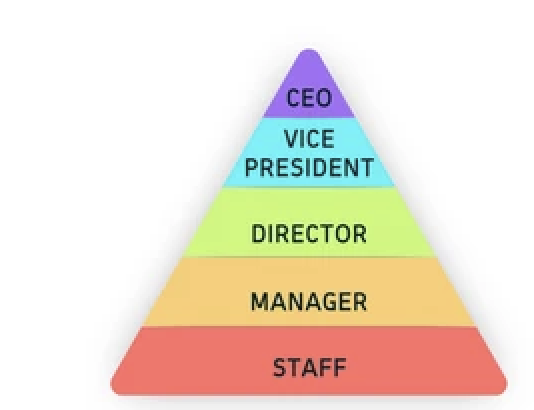

The Next Level of Effectiveness: Why Every Promotion Requires a Different You (Next Level Series 1/5)

At some point in every leadership career, there’s a moment when you realizeI can’t lead this new chapter by doing what worked in the last one. It’s not a sign you’re failing - it’s the moment you’re leveling up.

Each new leadership tier asks you to think differently, operate differently, and let go of the habits that helped you succeed in the past. As Scott Eblin writes in The Next Level, the hardest part of growth isn’t learning something new—it’s letting go of what no longer serves you. Promotions don’t simply expand your workload; they upgrade your mission. You move from driving outcomes through effort to driving outcomes through clarity, alignment, and the capacity you build in others.

With each step up, your scope stretches. You start in your lane—mastering your craft. Then you step into a role where your job isn’t to be the expert but to develop experts. Eventually, you’re coordinating across teams, then across functions, and finally shaping the system itself. Ram Charan and colleagues describe this in The Leadership Pipeline: each level requires a new way of managing time, value, and people. What was once a strength—personal execution—can quietly become a constraint.

Your currency also changes. It’s no longer speed, output, or “I can fix it.” As Marshall Goldsmith reminds us, what got you here won’t get you there. The skills that made you successful as an individual performer must evolve into new capacities—focus, influence, and the ability to multiply others’ effectiveness. Leadership at higher levels is less about what you know and more about how you enable learning and decision-making in others.

Many brilliant leaders struggle at this stage—not because they lack capability, but because they’ve outgrown the identity that made them successful. Harvard’s Linda Hill found that new leaders often try to “hold on to being the hero” instead of embracing the role of architect, connector, and culture-shaper. If no one has ever taught you how to step into bigger leadership, you’re not alone. Most leaders only learn when they hit a wall—and realize the work has changed.

This series is designed to help you avoid that wall—or move through it with clarity and confidence. Over the next few articles, we’ll explore each major leadership leap, what shifts, what unlocks success, and how to evolve your leadership identity along the way.

The next level isn’t about doing more - it’s about becoming more intentional, more strategic, and more scalable. The leaders who thrive learn to manage energy, systems, and meaning, not just tasks and time.

Reflection Question: Who does your next chapter require you to become?  Share your thoughts below—I’d love to hear what resonates. Comment and share below; We’d love to hear from you!

Quote of the Day: “To climb higher, you must travel lighter.” — Scott Eblin, The Next Level

The next article in this series (2/5) explores the first key transition: From Individual Contributor to Manager.

As an executive coach, I help leaders strengthen their leadership effectiveness and prepare for their next level. If this topic resonates, let’s start a conversation about what your next chapter might look like, contact me to explore this topic further.

What’s your next career level?

Impromptu Readiness: Speaking with Confidence on the Spot (Executive Comms Series 7/9)

Even the best-prepared executives get put on the spot: a board member asks for your perspective, the CEO calls on you mid-meeting, or a peer wants your quick take in the hallway. In these moments, you don’t have slides, notes, or time to rehearse. What you do have is your presence — and a few simple frameworks that help you think and speak clearly in real time.

Strong leaders know impromptu communication is not about perfection. It’s about composure, clarity, and confidence under pressure.

Frameworks for Impromptu Speaking

1. PREP (Point, Reason, Example, Point)

  • Point: State your headline clearly.

  • Reason: Explain why it matters.

  • Example: Share a short story or data point.

  • Point: Restate your headline.

Example: “Retention is our biggest risk right now. That matters because customer churn drives revenue loss. For instance, our Q2 churn rose by 4%. That’s why we need to double down on customer success.”

2. Pros → Cons → Recommendation. Great for answering tough questions on decisions. Lay out both sides, then share your judgment.

Example: “The upside of Option A is speed; the downside is higher cost. The upside of Option B is savings; the downside is slower execution. Given our growth priorities, I recommend Option A.”

3. Past → Present → Future. Ideal when asked about progress, strategy, or timing.

Example: “In the past quarter, we stabilized operations. Right now, we’re focusing on scaling efficiency. Going forward, our priority is automating to reduce costs.”

4. What → So What → Now What. Perfect for moments when you're asked to make sense of data, a situation, or a recent development — and need to move quickly from observation to insight to action.

  • What: State the facts or situation plainly.

  • So What: Explain the significance — why it matters to this audience.

  • Now What: Offer a clear recommendation or next step.

    Example: "Our NPS dropped 12 points this quarter (What). That signals customers are experiencing friction in onboarding, which puts renewal rates at risk (So What). I'd recommend we convene a cross-functional sprint to identify the top three friction points before Q4 (Now What)."

Techniques to Show Composure

  • Pause Before Responding. Silence feels long to you, but it signals confidence to others.

  • Keep It Short. Two minutes is usually enough; avoid rambling or drifting to other topics.

  • Signal Structure Out Loud. Phrases like There are two options” or “Let me share three quick points” help the audience track with you.

  • End with a Clear Takeaway. Don’t trail off — close with your key message.

Example in Action

In a recent executive offsite, a leader I worked with was unexpectedly asked for her perspective on a new product rollout. She paused, smiled, and said, “I’ll share this in three parts — past, present, and future.” In under two minutes, she outlined what the team had learned from past launches, where they stood today, and what she saw as the next priority. The room leaned in — not because her points were revolutionary, but because her delivery was crisp, confident, and structured.

Impromptu readiness is not about having all the answers — it’s about having enough structure to deliver clarity under pressure. With frameworks like PREP, Pros–Cons–Recommendation, and Past–Present–Future, what, so-what, now-what, you can turn surprise questions into opportunities to show composure, credibility, and executive presence.

Reflection Question: When you’re put on the spot, do you default to rambling - or can you rely on a structure that helps you shine?  Comment and share below; we’d love to hear from you!

Quote of the Day: "If you can't explain it simply, you don't understand it well enough." — Albert Einstein

The next blog in this series 8/9 will focus on effective disagreements at the exec. level.

As a leadership development and executive coach, I work with leaders to sharpen their executive communication skills, contact me to explore this topic further.

How do you think on your feet?

Presentation Formats That Strengthen Executive Communication (Executive Comms Series 4/9)

When presenting to senior leaders, how you structure your message is just as important as the content itself. A well-framed presentation helps your audience track, engage, and retain what you are saying. A poorly structured one leaves people lost, distracted, or asking, “What was the point of that?”

You do not need dozens of frameworks. A few simple ones, mastered and flexed for different situations, will elevate your executive presence and ensure your message sticks.

Framework #1: The STAR Model (Situation, Task, Action, Result).  The STAR model—sometimes extended as STAR(C) with a final Connection - was popularized in behavioral interviewing, most notably by Amazon, to ensure candidates shared clear, structured, and results-driven stories. Its power translates directly to executive communication, especially when sharing progress, lessons learned, or case studies, because it keeps updates concise, logical, and focused on impact.

  • Situation: What was happening?

  • Task: What needed to be done?

  • Action: What did you (or your team) do?

  • Result: What changed as a result?

·       (Connection): How does this tie back to the bigger picture or future priorities?

For example: “Outages were averaging 10 hours a month (Situation). We needed to improve reliability (Task). We upgraded the infrastructure (Action). Outages dropped to one hour a month (Result). This improvement positions us to scale customer demand confidently (Connection).”

STAR works because it’s outcome-oriented and easy to follow. By structuring updates this way, you not only share what happened but also reinforce why it matters to the business.

Framework #2: What–Why–How.  This is one of the most powerful frameworks for persuading executives to take action.  Communication Expert Nancy Duarte often stresses that leaders lose their audience when they skip the “why.”  This framework ensures you hit all three essentials.

·       What: Lead with the headline — the decision, recommendation, or key point.

·       Why: Explain why it matters and what’s at stake — the impact on strategy, results, or risk.

·       How: How you’ll execute or what support you need.  Outline the plan or next steps, keeping it concise and high-level.

Example: “We need to invest in new onboarding software (what). This will reduce employee ramp-up time by 25% and cut attrition in year one (why). The implementation requires a six-month rollout and $300K budget (how).”

The brilliance of this model is its clarity. By starting with the “what,” you respect the executive audience’s time. The “why” builds buy-in, and the “how” reassures them there’s a credible path forward.

Framework #3: Goals → Results → Insights → Next Steps (GRIN). Think of this as the executive retrospective plus roadmap. It’s especially powerful in quarterly business reviews or board updates, because it shows discipline in tracking outcomes while keeping a forward tilt.

How it works:

  • Goals: What we set out to achieve (anchor to original commitments).

  • Results: What happened — successes, misses, and the data behind them.

  • Insights: What we learned — trends, risks, or shifts in the environment.

  • Next Steps: Where we go from here — decisions, priorities, and asks.

For example: “Our goal was to expand market share in two regions (Goals). We achieved 8% growth in one, but fell short in the second due to delayed partnerships (Results). We learned that local distribution agreements are a bottleneck (Insights). Next quarter, we’ll fast-track partner onboarding and reallocate resources to accelerate regional momentum (Next Steps).”

This framework resonates in executive settings because it’s concise, repeatable, and momentum-building. You don’t just report results — you connect them to insights and actions that move the business forward.

Framework #4: Three-Point Takeaway.  Sometimes the simplest structure is the most powerful. The Three-Point Takeaway helps you cut through complexity and leave your audience with a message they’ll actually remember. Cognitive science reveals that our brains process and recall information most effectively in groups of three — it feels complete without being overwhelming.

How it works:

·       Main Message: The one thing you want them to remember.

·       Three Points: Three labeled pillars that support your message.

·       Examples: Data, stories, or anecdotes that make each point tangible.

For example:

“To make this launch successful (main message), we must nail three things: speed, quality, and customer experience (three points). Here’s one example of how we’re addressing each…”

This format is effective for board updates, strategy rollouts, or crisis communication. It gives your message structure, memorability, and impact. If your audience can repeat back two of your three points, you’ve succeeded.

Executive communication isn’t about dazzling with complexity — it’s about structuring your message so it lands with clarity, credibility, and impact. Whether you use STAR to share progress, What–Why–How to persuade, GRIN to review and reset direction, or the Three-Point Takeaway to drive memorability, these frameworks keep your audience focused on what matters most. Master a few, flex them as needed, and you’ll elevate not just your presentations, but your overall executive presence . The best communicators know the framework is not the point; it’s the bridge that makes your point land.

Reflection Question: Which of these frameworks would make your next presentation sharper and more memorable?  Comment and share below; we’d love to hear from you!

Quote of the Day: “Simplicity is the ultimate sophistication.” – Leonardo da Vinci

The next blog in this series 5/9 will focus on communication the hidden advantage of prep work.

As a leadership development and executive coach, I work with leaders to sharpen their executive communication skills, contact me to explore this topic further.

Which frameworks do you use?

Executive Communication Mistakes to Avoid: How Leaders Lose Their Audience (Executive Comms Series 3/9)

Strong communication builds trust, credibility, and alignment. Poor communication does the opposite - it confuses, frustrates, and erodes confidence in a leader. Many executives underestimate how small speech habits, unclear framing, or over-talking can quietly undermine their presence.

Here are the most common pitfalls to avoid in executive communication - and what to do instead.

1. Vague or Unclear Communication.  Senior leaders don’t have time to guess what you mean. Passive statements like “We might need to adjust some processes” leave others wondering: which processes, how much, and by when? 

Instead: Be specific. “We need to update the vendor onboarding process to cut approval time from three weeks to one.” Precision creates confidence.

2. Over-Talking and Losing the Point.  Long-winded updates bury the lead and lose your audience. The more detail you share, the harder it is for others to discern what matters. 

Instead: Use the bottom-line-first approach. Start with the headline, then explain if needed. Think: Answer → Context → Detail.  Example: Instead of saying, “We’ve been exploring different vendors for the past six weeks, meeting with four different firms, evaluating costs and implementation timelines…” say, “We recommend Vendor A — it’s the fastest to implement and most cost-effective. Here’s why.”

3. Dodging the Question.  One of the fastest ways to erode credibility is to talk around a question without answering it. Executives notice when you dance instead of deliver.

Instead: Acknowledge the question and respond directly. If you do not know, say so — and commit to following up. Confidence comes from honesty, not from having every answer.

4. Making Things More Complex Than They Are.  Complexity does not make you sound smarter; it makes you harder to follow. Leaders who restart from the beginning or pile on explanations risk confusing everyone.

Instead: Simplify. Structure your response in chunks (e.g., “There are two risks and one opportunity”). Guide people step by step, rather than swirling them in detail.

5. Interrupting or Talking Over Others. Cutting people off signals impatience and undermines trust. Even if unintentional, it conveys that you value your voice more than theirs.

Instead: Pause, listen, and build. A powerful phrase is: “I’d like to build on what Sarah just said…” It shows respect while reinforcing your point.

6. Weakening Your Words.  Seemingly small words and habits can undercut your authority. Common culprits include:

·      “Just” – Makes your point feel small or tentative (“I’m just checking in”). → Say: “I’m checking in.”

·       “Actually” – Implies surprise that you have something worth saying (“I actually have a question”). → Say: “I have a question.”

·      “Kind of / A little bit” – Softens your conviction (“I kind of think…”). → Say: “I think…”

·      “I’m sorry” (as filler) – Over-apologizing diminishes authority (“Sorry to bother you”). → Say: “I’d like to discuss…”

·      “Am I making sense?” – Signals self-doubt. → Say: “How does that land with you?”

·      Uptalk – Ending statements like questions makes you sound uncertain. → Use a steady tone.

Instead: Drop qualifiers and speak directly. Leaders who use clear, confident phrasing project authority and make it easier for others to follow their lead.

Communication mistakes do not just distract — they diminish executive presence. Vague language, rambling, dodging, or weak phrasing can cause others to lose confidence in your message. The best leaders avoid these traps by being clear, concise, and confident — and by creating space for others to contribute.

Reflection Question: Which of these habits do you most need to unlearn, and what will you practice instead to strengthen your communication?  Comment and share below; we’d love to hear from you!

Quote of the Day: “Wise men speak because they have something to say; fools because they have to say something.” – Plato

The next blog in this series 4/9 will focus on presentation formats to enhance your communication

As a leadership development and executive coach, I work with leaders to sharpen their executive communication skills, contact me to explore this topic further.

Which mistakes do you see often?

Executive Communication: Fundamentals that Matter Most (Executive Comms Series 2/9)

Great leaders are not only remembered for what they achieved but for how they communicated. The ability to share ideas clearly, inspire confidence, and align others is a hallmark of executive presence. Yet many leaders struggle here — they bury the lead, overwhelm with detail, or miss the subtle cues in the room.

Strong executive communication rests on a few timeless fundamentals. Mastering these does not just make you a better speaker; it makes you a more trusted leader.

Fundamentals that matter most:

1. Set a Vision That Inspires Confidence.  Senior executives want more than updates - they want to know where you are headed. A compelling vision communicates the “north star” and helps others believe in you. Even when presenting a pilot project or early-stage initiative, frame it in terms of future impact: “Here’s what success would unlock for us, and how it connects to the bigger strategy.”  When people hear vision, they feel momentum. When they hear only details, they wonder what it all means.

2. Be Strategic - Connect to the Bigger Picture.  Executives sit at the intersection of competing priorities. If you cannot connect your work to the broader strategy, it risks being dismissed as tactical.  Always ask yourself: How does this affect the business as a whole? What does this mean for revenue, risk, efficiency, or growth?  For example, do not just say, “We’re updating the vendor system.” Instead: “By updating the vendor system, we’ll reduce processing time by 30%, which frees up capital for growth initiatives.”  The difference between noise and impact is strategic framing.

3. Adjust to Your Audience.  Great communicators tailor their message. The same idea should sound different when speaking to a board member, a technical peer, or a cross-functional team.

Think of it like levels of explanation:

  • To a CEO: share the headline, business impact, and key decision.

  • To a technical peer: add details, risks, and interdependencies.

  • To a broader team: emphasize relevance, benefits, and what changes for them.

Rebecca Knight writes in HBR that every workplace conversation has both the explicit discussion (the words) and the tacit one (the unspoken reactions). Reading the room — noticing body language, tone, and energy — is as important as delivering the content.

4: Blend Data with Story.  Data creates credibility. Stories create memorability. You need both.

Executives remember numbers that tie to outcomes, but stories of customer impact, employee success, or lessons learned move them. For example: “Retention rose 8%” is good. “Retention rose 8% — that’s 5,000 more families staying with our service” is better.  When you blend quantitative with qualitative, you engage both logic and emotion — the two engines of decision-making.

5. Listen as Much as You Speak.  Executive communication is not only about the message you deliver — it’s also about the space you create.

  • Ask open-ended questions (“What risks do you see?”).

  • Build on others’ ideas (“I like your point, and I’ll add…”).

  • Notice who hasn’t spoken and draw them in.

  • Regulate how much airtime you’re taking.

This is how communication becomes a leadership tool for alignment rather than just transmission.

6. Navigate Questions with Presence. Questions are not hurdles — they are opportunities to show confidence. Slow down, listen fully, and respond without defensiveness. Acknowledge the value of the question, then connect your answer back to the bigger picture. Leaders are judged less on having every answer, and more on how they carry themselves under pressure.

Executive communication is not a “soft skill” — it’s a leadership skill. When you set vision, connect to strategy, adjust to your audience, blend data with story, listen actively, and navigate questions with presence, you demonstrate credibility and build trust. The fundamentals may sound simple, but they are what separate leaders who get heard from those who get overlooked.

Reflection Question: Which of these fundamentals comes most naturally to you — and which one, if mastered, would elevate your executive presence the most?  Comment and share below; we’d love to hear from you!

Quote of the Day: “The single biggest problem in communication is the illusion that it has taken place.” – George Bernard Shaw

The next blog in this series 3/9 will focus on common communication mistakes to avoid. 

As a leadership development and executive coach, I work with leaders to sharpen their executive communication skills, contact me to explore this topic further.

How do you speak with impact?