
A competitive drive is one of leadership's great fuels. At senior levels, it can quietly become one of its greatest liabilities.
Many leaders build their careers on an uncommon drive to win. They push hard, advocate forcefully, and compete for the opportunities and resources that move things forward. That competitive edge creates real momentum — it fuels achievement, generates visibility, and produces results.
But at senior levels of leadership, the rules change. What helped someone rise through an organization can become a constraint once they're responsible not just for their own success, but for the success of the enterprise. The issue is not wanting to win. The issue is needing to win — in meetings, in debates, in decisions, in credit.
When that shift happens, the focus drifts from collective success to personal victory. Conversations become competitive rather than collaborative. Leaders start protecting territory instead of solving problems together. And the organization quietly begins to lose something it can't afford to lose: alignment.
How Competition Gets Hardwired
For most high-performing leaders, competition has been reinforced from early on. Academic environments reward top performance. Athletic cultures celebrate winning. Early career advancement often favors those who advocate most strongly for their ideas and demonstrate a drive others can see. Over time, these experiences solidify a belief: success is closely tied to outperforming others.
That instinct can be a powerful engine. But executive leadership requires a different orientation. Sally Helgesen notes that as leaders rise, the work shifts fundamentally — from individual achievement to enabling the success of others and the organization as a whole. That transition requires trading the need to win every individual debate for the discipline of building collective wins.
The leaders who make that trade tend to gain more influence over time, not less. The ones who don't often wonder why the room stopped engaging with them.
The Cost of a Win-Lose Mindset
When leaders consistently approach conversations through a win-lose lens, the dynamic of the leadership team begins to shift — gradually, and often below the surface. Colleagues start preparing their positions rather than exploring possibilities together. Meetings begin to feel more like negotiations than collaborative problem-solving. Several patterns emerge over time:
• Leaders advocate primarily for their own function or agenda, even when enterprise priorities point elsewhere
• Discussions become exercises in persuasion rather than exploration
• Colleagues become cautious about challenging ideas — not because they lack insight, but because they've read the room
• Credit becomes a contested resource rather than something shared generously
Instead of functioning as a unified executive team, leaders begin operating as strong individuals with competing priorities. The organization pays the price for that fragmentation in slower decisions, reduced trust, and missed opportunities.
What This Looks Like in Practice
Consider an executive team debating resource allocation across several major initiatives. The head of product presents a compelling case for accelerating a new launch and argues for the majority of next quarter's investment. The head of operations raises concerns about readiness and supply chain risk.
Win-lose mindset: The product leader defends the proposal. Data is deployed primarily to reinforce the existing position. Counterpoints are reframed as overly cautious. The conversation becomes a contest, and the team makes a decision that hasn't been fully examined.
Collective mindset: The product leader responds differently: "Those operational risks are real. What would need to be true for us to launch successfully?" The conversation broadens, additional perspectives emerge, and the team makes a stronger decision — one they can actually execute together.
The leader didn't lose influence in that second scenario. They deepened it. By shifting the focus from winning the argument to solving the problem, they demonstrated something that matters enormously at senior levels: that their commitment is to the organization, not their own position.
A Different Orientation
The most effective executives make a subtle but consequential shift. They stop asking: How do I win this discussion? They start asking: How do we reach the best outcome together?
That shift changes how they show up — in meetings, in decision-making conversations, in the moments after a decision is made. Instead of protecting ideas, they test them. Instead of competing for influence, they use their influence to elevate the collective thinking of the group.
Practices that support this shift:
• Enter meetings genuinely curious about what others' perspectives will add — not just prepared to defend your own
• Publicly support strong ideas from colleagues, even when they differ from your initial view
• Once alignment is reached, advocate for the team's decision as your own — even if your proposal wasn't selected
• Ask what success looks like from other functions' perspectives before making the case for yours
• When you catch yourself trying to win an argument, pause and ask: what's the best outcome here, regardless of who proposed it?
Ironically, leaders who stop trying to win every conversation tend to gain more influence over time. Their credibility grows precisely because colleagues trust that their contributions are oriented toward advancing the organization — not scoring personal victories.
Leadership is not about proving your idea is the strongest. It's about ensuring the organization arrives at the strongest answer — and then getting behind it fully.
Reflection Question. Where in your leadership might the desire to win be limiting your ability to collaborate more effectively with other leaders? Comment and share below; I’d love to hear your perspective.
Quote of the Day. “Leadership is not about being the best. It’s about making everyone else better.” — Sheryl Sandberg
As an executive leadership coach, I work with leaders to increase their effectiveness. Often that means helping them recognize subtle habits that once fueled their success but now quietly limit their impact. If you’d like to explore this topic further, feel free to reach out.
The next blog in this series (3/4) will explore another leadership limitation: arrogance, and how confidence can quietly cross the line into a barrier to learning and growth.
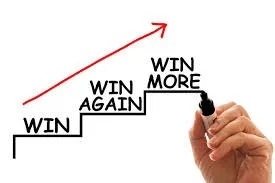
When does winning become a liability?