Designing the Infrastructure: Cadence, Ratings, and the Systems That Support Performance (Performance Mgmt. Series 3/7)

Every executive team says the right things about performance. Fewer build the systems that make those things true.

Strong performance cultures are not powered by good intentions. They are powered by infrastructure. Clarity and incentives matter, and so does collaboration design. But without operational discipline — cadence, structure, tools, and calibration — performance management becomes inconsistent and personality-driven. That's when employees start "managing their manager" instead of managing their performance.

This is where many executive teams stall. They agree on the philosophy. They struggle with the architecture.

A performance system requires three infrastructure layers: rhythm, rigor, and reinforcement.

1. Rhythm is the cadence that prevents drift. Performance management fails when it is episodic. A once-a-year review does not create accountability; it creates memory. High-functioning organizations establish a predictable rhythm: recurring 1:1s, quarterly goal alignment, periodic formal reviews, and calibration moments. The purpose of cadence is not bureaucracy. It is prevention.

2. Rigor is the criterion that makes performance fair. Infrastructure without rigor becomes performative. If ratings exist, they must mean something. “Meets” and “Exceeds” are not useful without shared definitions. Two managers should not be operating with two different standards of excellence. Clear rubrics and capability matrices reduce bias and create consistency. Calibration conversations matter because they force leaders to pressure-test their assessments, not just defend them.

3. Reinforcement is what turns evaluation into development. Performance management is not only about reviewing the past. It is about preparing for the future. Strong systems incorporate talent reviews focused on readiness, potential, succession, and development investments. Without talent reviews, succession becomes reactive. When they are present, leadership development becomes strategic.

This is also where separating growth and compensation becomes operationally important. Development conversations should explore aspirations, stretch opportunities, exposure, and long-term trajectory. Compensation conversations should focus on performance against defined metrics. Blending the two muddies both — and almost always makes the development conversation less honest.

Technology can help, but it cannot lead. Many organizations use platforms like Workday, Lattice, 15Five, Culture Amp — or even structured workflows in Monday.com — to support 1:1s, feedback, goal tracking, recognition, and talent reviews. Used well, tools create transparency and institutional memory. Used poorly, they digitize ambiguity.

Executives sometimes over-index on selecting software when the real work is aligning on standards, cadence, and consequences. Tools should make performance conversations easier to have — not replace the courage required to have them.

At its core, infrastructure is about consistency. When performance management depends entirely on individual manager discretion, the system is fragile. When you institutionalize rhythm, rigor, and reinforcement, performance becomes scalable.

Reflection Question: Where is your performance management system currently dependent on individual manager discretion rather than shared infrastructure?  Comment and share below; we’d love to hear from you!

Quote of the Day: “Without data, you’re just another person with an opinion.” — W. Edwards Deming

As an Executive Coach, I partner with leadership teams to help them performance manage with both excellence and compassion. If you’d like to strengthen how your leaders hold standards and develop people, let’s connect.

The next article in this series 4/7 will focus on upward accountability.
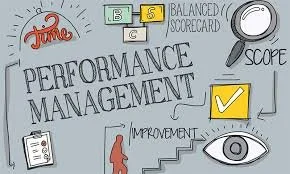
Which system supports your goals?

When Incentives Kill Collaboration: The Hidden Design Flaw in Performance Mgmt. (Performance Management Series 2/7)

Most organizations say they value collaboration. Many include it in leadership principles and town halls. And then they design performance systems that reward individual heroics and short-term output.

The result is predictable. People do not become poor collaborators because they lack character. They become rational actors inside a misaligned system.

Heidi Gardner has written extensively about this tension in professional services firms. Her core message is simple: if collaboration is treated as a soft value but performance is measured as hard individual metrics, people will prioritize what is most rewarded and least ambiguous. Over time, collaboration turns into theater.

I’ve seen this play out with my clients in consulting environments structured around siloed metrics. Each practice group owned its number. Bonuses were tied to that number. Publicly, the firm celebrated “full-service collaboration.” Practically, people filled their own bucket first. Only after hitting the target did they consider how other capabilities might serve the client. Collaboration became an afterthought rather than a design principle.

The shift came when performance metrics were redesigned around key client teams. Revenue volume was no longer sufficient. Leaders began measuring revenue quality, the sustainability of client relationships, and the account’s overall health. Cross-functional coordination mattered. Long-term value mattered. The question changed from “How much did you sell?” to “What value did we create — and is it durable?”

Engagement improved almost immediately. When people are rewarded for enterprise contribution rather than internal competition, energy shifts. Patty McCord has made a related point in her work on talent density: high performance isn’t just about keeping strong people — it’s about removing structural conditions that make strong people want to leave. Misaligned incentives are one of those conditions.

This is why multi-level scorecards matter. A single metric is easy to manage but rarely strategically correct. If you want an enterprise to behave like an enterprise, performance must be evaluated at three levels: the broader organizational outcome, the team’s contribution to that outcome, and the individual’s results and capabilities. The weighting matters. If individual output dominates, self-optimization wins. If enterprise goals dominate without line of sight, people feel powerless. The executive task is to balance influence with impact.

Sales environments often illustrate this tension clearly. Incentivize pure revenue growth, and you may get deals that operations cannot fulfill, promises customer success cannot sustain, and documentation that is thin because the next deal is already in motion. Revenue rises. Customer satisfaction declines. Leaders call it an execution issue. In reality, the system paid for speed and volume — and got exactly that.

True collaboration is not cross-selling disguised as partnership. Sophisticated clients can often detect compensation shifts simply by observing behavior. When introductions and referrals increase suddenly in January, clients notice. Collaboration should begin with a different question: is this in the client’s long-term interest? If you cannot articulate the value created, it is likely not collaboration.

A more strategic tension also plays out: short-term versus long-term value. Organizations often speak aspirationally about sustainability, innovation, and multi-year initiatives while over-weighting short-term, easily measurable metrics. People are not ignoring long-term priorities because they are shortsighted. They are responding to what the system reinforces. Incentives guide decision-making and resource allocation. If long-term thinking matters, it must be visible and rewarded.

Tony Hsieh famously offered employees money to quit as a way to protect culture. While extreme, the principle is instructive: incentives shape behavior. When incentives and stated values conflict, incentives win.

The strongest performance systems align what leaders say they value with what they actually reward. They measure collaboration in meaningful ways, protect against the distortions of narrow metrics, and make enterprise contribution visible. When alignment is present, people stop gaming the system and start building the business.

Reflection Question: Where are your incentives quietly encouraging siloed behavior, even while you publicly advocate collaboration?  Comment and share below; we’d love to hear from you.

Quote of the Day: “Show me the incentives, and I’ll show you the outcome.” — Charlie Munger

As an Executive Coach, I partner with leadership teams to help them performance manage with both excellence and compassion. If you’d like to strengthen how your leaders hold standards and develop people, let’s connect.

The next blog in this series 3/7 will focus on designing the infrastructure.

How do you align incentives?